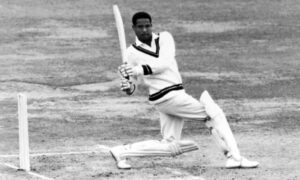
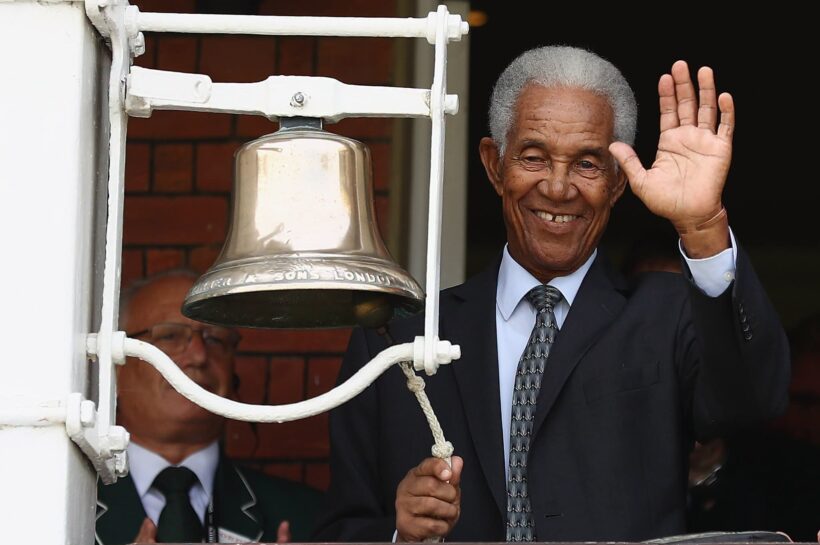
Do Bengali film-goers remember that song from the movie Jay Jayanti? The lyricist Shyamal Gupta, the composer Manabendra Mukhopadhyay, and the singer Sandhya Mukhopadhyay –none of them are alive today; they were all associated with that famous song from the popular 1971 film starring the Uttam Kumar and Aparna Sen duo. The real-life figures mentioned in the lyrics – Neil Armstrong, Tenzing Norgay, and Brazil’s Pelé – have also passed away. Now, Garfield Sobers has departed too, just eleven days shy of reaching the nervous nineties.
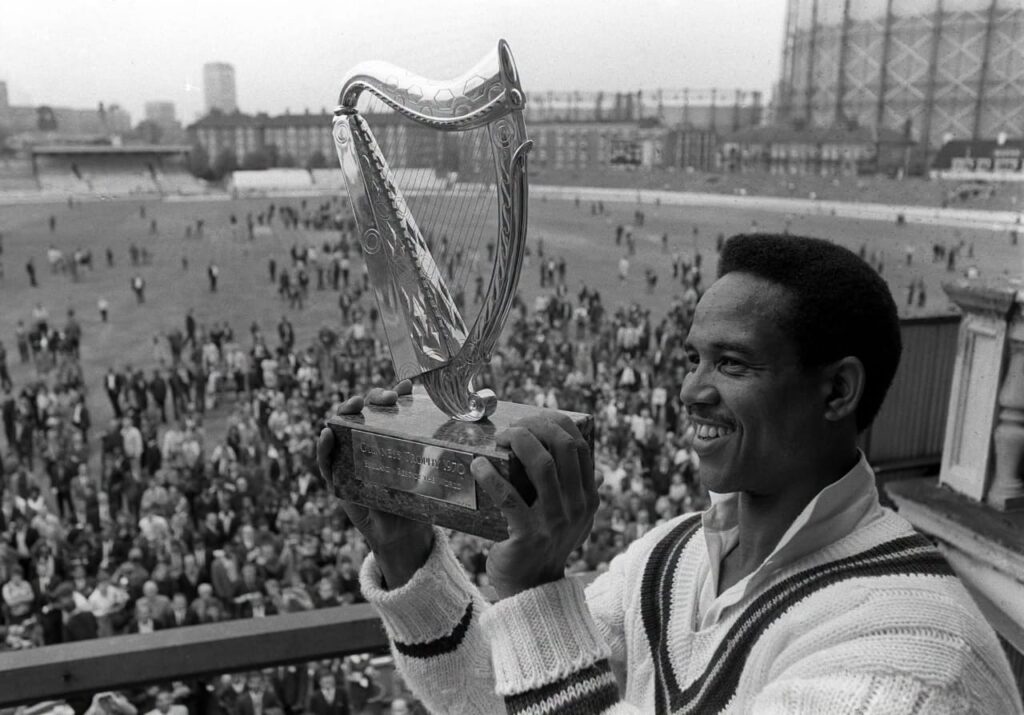
From his arrival on earth on July 28, 1936, to July 17, 2026 – long before his final day arrived, he had already retired from the cricketing stage nearly fifty-two years ago. Today, he bid farewell to the stage of life itself. Rest in peace, Sir Garry – a police band musician in his teens, a cricketer in his youth, a commentator and coach in retirement, and above all, one of the greatest brand ambassadors the sport of cricket has ever known—my beloved Garry!
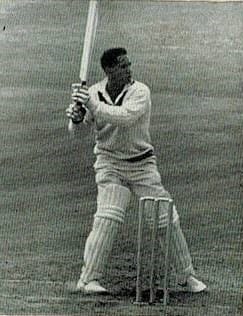
Much has been discussed, and rightly so, about Sobers the cricketer: his skills, his achievements, and his statistics. But today, I want to speak about the Sobers I witnessed with my own eyes.
Garry, the centurion at my ‘Debut Match’ at Eden Gardens
“Come on, let me show you something amazing today,” Manas-da had said one early Sunday morning while sipping his cuppa. The son of my aunt (who lived in Allahabad), he was staying with us in Kolkata at the time and working for a pharmaceutical company. He was a lively, boisterous man who loved me dearly and was absolutely crazy about cricket. On holidays, I would often practice batting in the narrow alley beside our house using a tennis ball, where I would try to emulate Pataudi – ‘Tiger’ was my cricketing idol back then, and he remains so to this day!
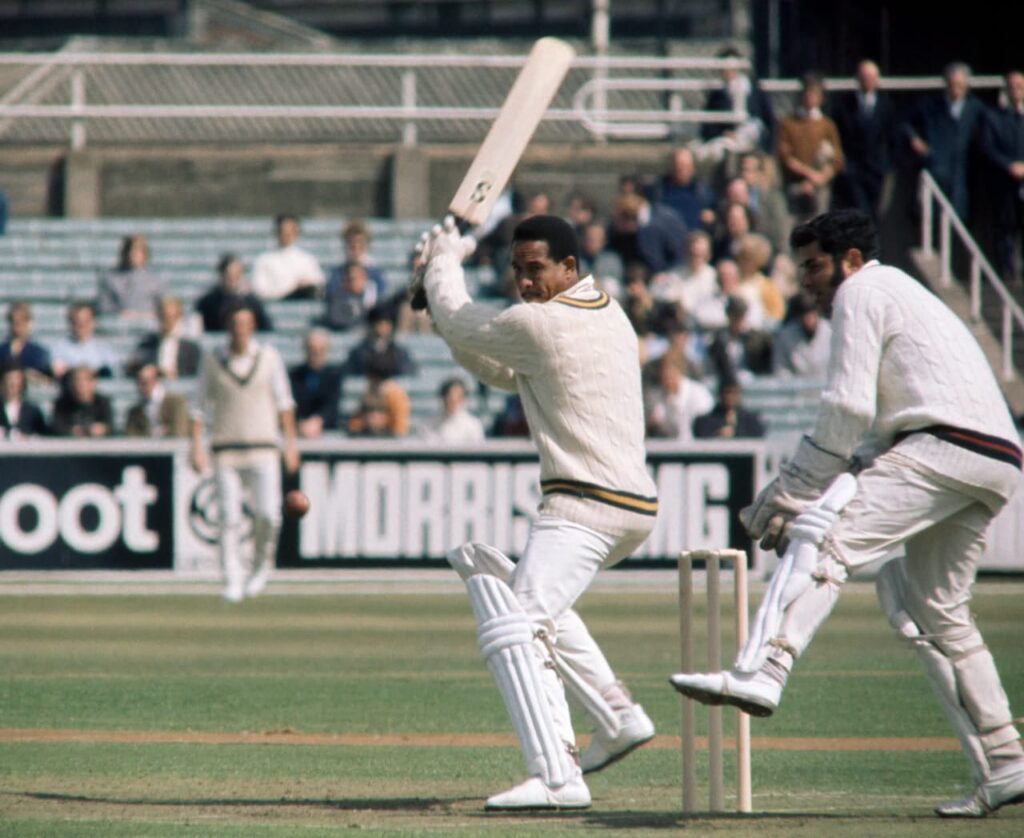
As soon as I heard him, I gulped down my cup of Bournvita in a flash and was ready to go in an instant. I quickly finished my bath and breakfast; we hailed a black-and-yellow Ambassador cab and headed straight for Eden Gardens. I had visited the beautiful garden adjacent to the stadium once before with my father – watching the pagoda and gobbling ice cream – but this time, the experience was entirely different.
It was April 1964. The heat was setting in, and the sun was beating down fiercely on the open gallery. Yet, before me lay “magic on the green horizon” – the game was underway! Which game? Let me tell you.
“E W Swanton, a famous British journalist and sportswriter, organized and managed a Commonwealth XI, including Sobers, Benaud, the Nawab of Pataudi, Sonny Ramadhin, Seymour Nurse, Richard Hutton (son of Sir Len), etc. that played against an Indian XI (led by Chandu Borde) at Calcutta in April 1964.”
After about two hours, Manas-da broke the spell of that cricketing magic and said, “Come, let me take you home. You didn’t have lunch before coming, and the sun is scorching. If we delay any further, ‘Chhotomama’ will get angry, ‘Mami’ will worry, and you might even fall ill.” ‘Chhotomama’ (youngest maternal uncle) – my father – was some sort of a stickler for rules; ‘Mami’ meant my mom.
I was devastated! I wasn’t budging an inch until I had seen the innings of that ‘left-handed’ batsman (the term ‘batter’ – politically correct as it is now – hadn’t come into vogue back then!) to the very end. For the next ten minutes, Manas-da’s attempts—pleading, scolding, and threatening – all failed. Why on earth do people call Dravid or Pujara ‘The Wall’? They clearly hadn’t witnessed my brand of stone-walling on that afternoon! And so, my lunch consisted of two cucumber sandwiches and a boiled egg bought from a stall behind the gallery, washed down with “pure drinking water” from the tap. And then…
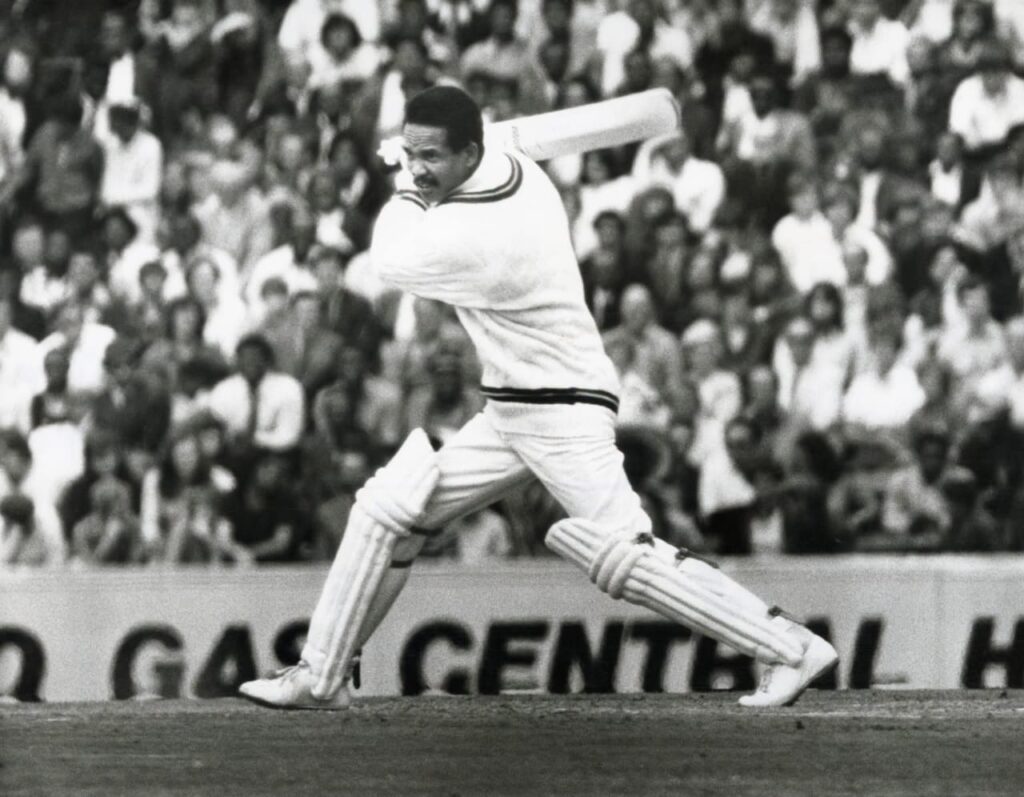
After watching the game until the day’s close—applauding wildly as that ‘left-handed’ batsman reached his century and returning home in the late afternoon with a face scorched by the harsh mid-April sun – I felt a sense of sheer euphoria.
At home, amidst my father’s scolding, my mother’s complaints, and Manas-da’s hesitant explanations, that ‘left-handed’ batsman – the southpaw Garry Sobers, who had conjured magic on the green turf of Eden, laid the foundation for the passion that would nourish my soul for the rest of my life! I had found another ‘cricketing idol,’ one who remains in that role even sixty-two years later, despite having witnessed so many great cricketers since then.
Is it any wonder that my love for cricket would run so deep? The first real cricket match of my life was at Eden Gardens, and Garry Sobers welcomed me there with a century—what more could one ask for? “Thank you, Manas-da and Garry”!!
Gary the Bowler: after that Mayhem at Eden:
Let us now return to Eden Gardens on January 5, 1967. Two days after the chaos of January 1st, the match resumed. India, having been forced to follow on, had come out to bat on the final day; they were at 133 for 5, still trailing by 90 runs. Budhi Kunderan, Rusi Surti, ML Jaisimha, Tiger Pataudi, and Chandu Borde were already back in the pavilion, while the participation of the injured and unwell Abbas Ali Baig remained uncertain. In this dire situation, Hanumant Singh and Venkataraman Subramanya were battling at the crease, having lifted the team from 108 for 5 to 155 through their partnership.
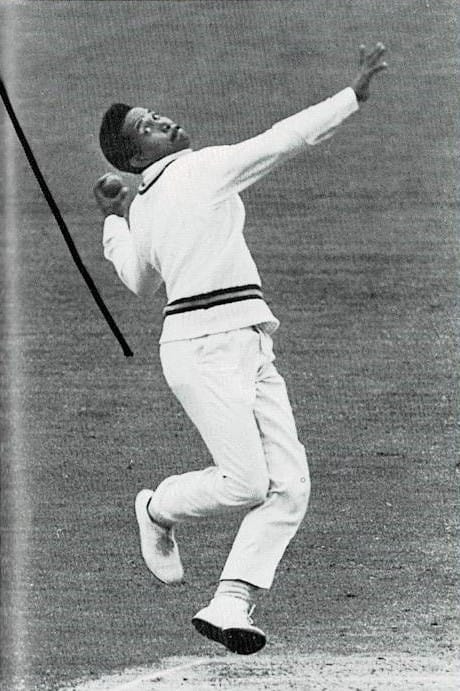
Sobers began bowling spin with a slightly worn ball, facing hi was the right-handed Hanumant. One delivery drifted well outside the leg-stump; Hanumant let it go, and it settled into the gloves of the wicketkeeper, Jackie Hendricks. The next delivery was also slightly outside leg-stump; Hanumant let it go again, and the ball went to Hendricks. The following delivery was just outside leg-stump; Hanumant started to play at it but then let it go, and Hendricks gathered it. The next one was marginally outside leg-stump; Hanumant let it pass, but the ball cut in and shattered the stumps – Hanumant bowled Sobers 37, a victim of Garry’s bowling wizardry. A change of angle at the point of release, a subtle shift in the line, precision in length, and control over spin – back then, yours truly, an eight-year-old schoolboy, couldn’t grasp all the technical nuances, but I certainly understood what it meant to be “outfoxed” and dismissed!
The Indian innings folded after just another 23 runs; India lost by an innings and 45 runs, trailing 0-2 in the three-match Test series. Garry’s contribution to that match included scoring 70 runs in 85 minutes and taking 7 wickets for 98 runs across 48.5 overs (including 18 maidens) in the two innings combined – opening the bowling with pace (alongside Charlie Griffith) and later switching to spin – though he did not take any catches. There was no ‘Player of the Match’ award back then, but it is not hard to guess who would have won it.
Who was Gary, and what was he like?
There are many who could answer this; among Indians, the names of Chandu Borde, Farokh Engineer, Erapalli Prasanna, Sunil Gavaskar, and Raju Mukherjee come to my mind right now. They certainly would know and understand him far better. Sunny-ji and Raju-da might speak or write about it.
Some cricket enthusiasts have surely seen the video highlights of his 254-run innings against the Australians – playing for the Rest of the World (ROW) XI at the MCG during the 1971–72 season, or the video of him hitting six sixes in a single over against Glamorgan while playing for Nottinghamshire in the 1968 English County season. They might get some idea of Sobers’ genius from those, although judging a player solely by video highlights is not wise, IMHO; the writings of experienced and skilled eyewitnesses are far more reliable – though, of course, nothing beats a video of the entire innings.
I possess neither the arrogance, nor the audacity, nor the foolishness to count myself among those ‘experienced and skilled eyewitnesses;’ yet, as a cricket enthusiast, the man who remains, in my eyes, the ‘Greatest Cricketer of All Time’ is that ‘five-in-one’ player (left-handed batter, close-in fielder, left-arm pacer, left-arm orthodox spinner, and left-arm Chinaman bowler), the one and only Sir Garfield St Aubrun Sobers.
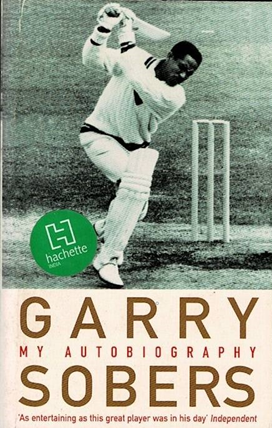
May be the Bong cricket-lovers can recall that line from the song mentioned at the beginning of this piece: “…people will remember, and the name will be etched in history.”