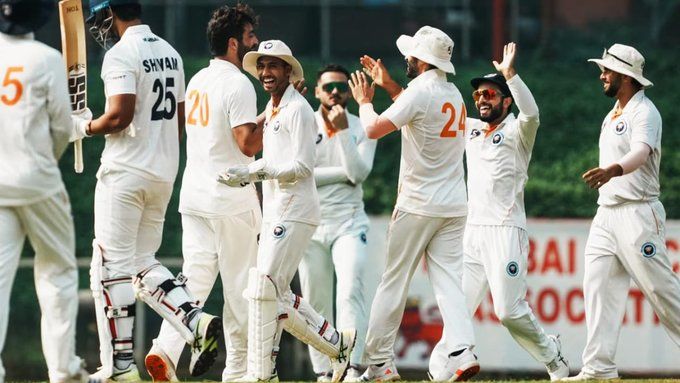
The Ranji Trophy, India’s premier first-class cricket competition, has served as a proving ground for the country’s finest cricketing talent since its inception in 1934. Among its many participants, the Jammu & Kashmir (J&K) cricket team has emerged as a symbol of resilience, passion, and gradual transformation. As the much-awaited Ranji Trophy final begins tomorrow, the spotlight is firmly on J&K—a side that has fought against odds for over 60 years and is now on the cusp of scripting a historic triumph.
Jammu & Kashmir was not part of early days of Ranji cricket and they had to wait even after the independence for 12 years to finally be a part of it in 1959-60. The initial decades were marked by struggles, with the team frequently languishing at the bottom of the points table. Limited infrastructure, harsh climatic conditions, and the region’s unique geopolitical situation posed daunting challenges. The cricketing culture was still nascent, and for local players even participating was a big deal rather than competing with other strong teams like Delhi, Haryana and Punjab in the North zone.
The last decade has been transformative for Jammu & Kashmir cricket. Several factors contributed to the change: investments in infrastructure, the establishment of academies, exposure to national-level coaching, and a growing interest among youth. The cricket association’s efforts, along with support from the Board and few ex-players helped the team access better training facilities and expert guidance.
J&K’s victory over Mumbai in the 2013-14 Ranji season was a turning point, boosting confidence in their ability to compete at top levels. Parvez Rasool became the region’s first Indian team member, while Abdul Samad and Umran Malik have established themselves in the IPL, elevating J&K cricket’s reputation.
In recent seasons, the team has consistently performed well in the league stages, with a mix of experienced campaigners and energetic youngsters. Their aggressive approach, improved fitness levels, and tactical acumen have all contributed to their rise. The current squad, featuring a blend of homegrown players and seasoned professionals, reflects the region’s cricketing renaissance.
Another corner was turned when an Indian domestic veteran, Parash Dogra joined the J&K team before the 2024-25 season. Dogra who is currently 42 has played IPL for multiple teams and have massive experience in the domestic circuit. He utilized his experience and leadership to motivate a young bunch of J&K cricketers, most notably Auqib Nabi, the fast bowler with 99 wickets in last two Ranji seasons, to turn them into a bunch of fearless players with the winning mentality.
They have beaten two strong teams Madhya Pradesh and Bengal in the knockouts to book their place in the final. Both victories did not come easy and in Semi-final they have conceded the first innings lead before making a superb comeback to bowled Bengal for just 99 in their home ground. Nabi was the star again like the whole season with his 9 wickets in the match which helped his team to reach the final and compete for the coveted trophy.
Victory in the final would be more than a trophy; it would be a watershed moment for cricket in the region. Such an achievement could inspire a new generation of players, attract greater investments in sports infrastructure, and further integrate the region into the national cricketing mainstream. The potential ripple effect on local sports culture, youth engagement, and even tourism cannot be understated.
Their opponents in the final are not pushovers, in fact J&K will go in the final as underdogs in front of Karnataka who was won the Ranji trophy eight times. They would mostly field an eleven including five current Indian Test players with all of their top four donning India caps including KL Rahul and Devdutt Padikkal. They will be followed by R Smaran, the youngster with 950 runs in this years’ Ranji Trophy. It will be a huge task for Parash Dogra’s men but the know that a win would be historical and that would elevate them to national prominence, creating more pathways for them to represent India at higher levels. This could also serve as a powerful message of unity, resilience, and hope, not just for the sporting fraternity but for the entire region.