There are nights a nation forgets. And then there are nights a nation carries.
Ahmedabad 2023 was not just a defeat. It was a silence too large for a stadium to hold. A World Cup final played at home, lost under floodlights meant for fireworks. India did not merely lose a match; it lost a promise it had whispered to itself for months: “This time, it will be different.“
But cricket, like memory, never stops moving forward. It only waits for a response.
That response arrived in 2024.
The T20 World Cup was not India’s escape from Ahmedabad but was India’s confrontation with it. Barbados became the far shore of a long emotional crossing. Where Ahmedabad was noise without reward, Barbados was control without fear. The journey between them was not built on a miracle but on method.
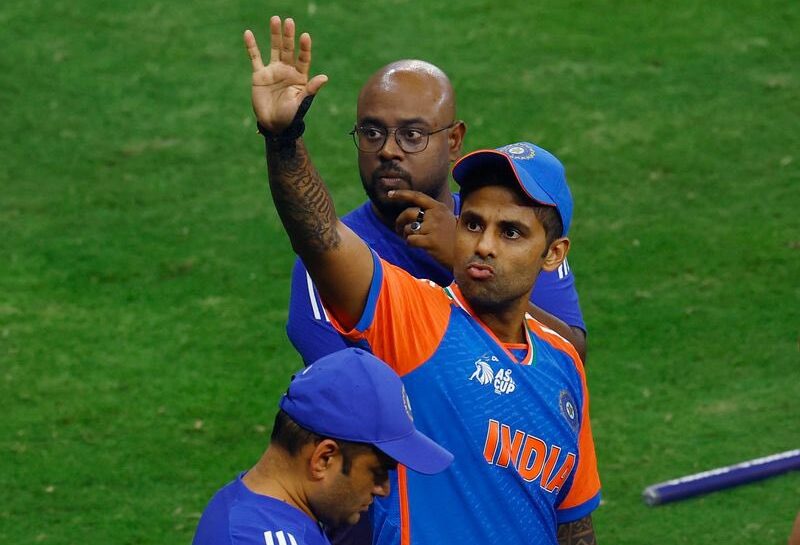
India’s 2024 campaign was a study in alignment. Rohit Sharma’s intent set the tone. Virat Kohli carried the gravity of a big moment. Rishabh Pant brought urgency back into broken phases. Suryakumar Yadav reshaped the middle overs into a theatre of invention. Shivam Dube added wright to momentum. Hardik Pandya gave the finishing touch, and Axar Patel turned utility into influence.
Then came the finals. 29th June, 2024, Barbados
India: 176 for 7
South Africa: 169 for 8.
Seven runs. That was the margin between memory and release.
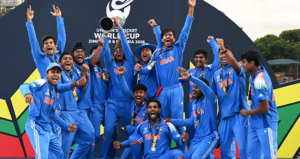
But margins lie. What won India that final was not the scoreboard; it was restraint. Jasprit Bumrah bowled like consequence itself, Arshdeep Singh backed him up as if destiny was writing a tale for itself, and Hardik Pandya delivered overs heavy with history. The fielding closed doors where panic once lived, and when Suryakumar Yadav held the catch on the boundary, it felt like a sentence finally ending and a country of 1.5 billion going berserk with happiness.
India had not erased Ahmedabad. It had answered it.
That redemption arc from heartbreak to ecstasy is “From Ahmedabad to Barbados: The Great India Redemption”. It is not a book about India lifting the T20 World Cup but about what failure does and how grief reorganises priorities, how chaos became rehearsal, and how belief became blueprint, and how a country celebrated its win through belief.
Now as the the T20 World Cup begins again on 7th February, 2026, the story turns to possibility. This time with different names but the same strong ability of winning the world cup.
Abhishek Sharma brings fire at the start. Suryakumar Yadav remains the language no bowler can speak fluently Hardik Pandya still binds moments into outcomes. Tilak Varma offers balance when speed threatens to break space. Varun Chakravarthy brings mystery back into measurement. Jasprit Bumrah remains the quiet argument every chase loses.
This is not the 2024 team reliving triumph. This is the 2026 team inheriting its meaning. And what waits in this tournament is not just silverware. It is history.
India can become the first nation to win back-to-back T20 World Cups.
India can become the first nation to win three T20 World Cup titles.
India can become the first nation to win a T20 World Cup at home.
These won’t just be records but will be a statement where India will say that they are the strongest T20I team in the world. But what makes India so dangerous is not just numbers; it is the belief this team carries, the preparation from the pressure this team has gone through. This is the invisible advantage India carries into this World Cup: not hype, but revision and rehearsal, which makes them a strong unit.
Cricket loves its mythos. But this story is not a myth. It is a sequence.
Loss. Learning. Design. Redemption. Now, Pursuit.
Pursuit of becoming a dominant force in T20’s in the world. 2026 will be a chapter where India runs behind history and achieves something that no one has ever seen before.
(From Ahmedabad to Barbados: The Great India Redemption was written by Yashaswee Raman and Sidharth Gulati, and is available on Amazon.)