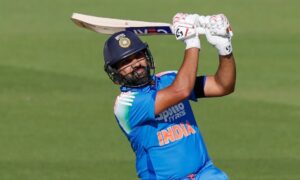
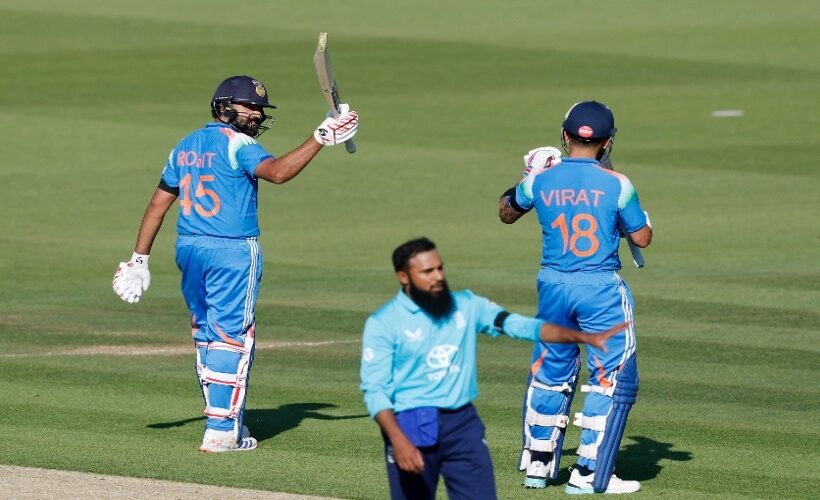
Ahead of the final ODI of India’s three-match series, the speculation was at its pinnacle. Some said it was going to be the final international game for the Indian batting stalwart Rohit Sharma as the selectors agreed to move on from him. But BCCI secretary Devajit Saikia obliterated all the news, and Rohit Sharma himself did it at the iconic “Home of Cricket”.
Rohit bounces back in style as records tumble
Rohit had a nightmare of starts in the first two ODIs. The first ODI saw him score a sluggish 11 off 21, and he followed it up with a 26 off 47, his slowest knock of a 25+ score in ODI cricket in terms of strike rate. The initial few overs of the Lord’s ODI were not easy for batting. Jofra Archer and Gus Atkinson tested Rohit, and Shubman Gill and India were 29/0 after the first 7 overs.
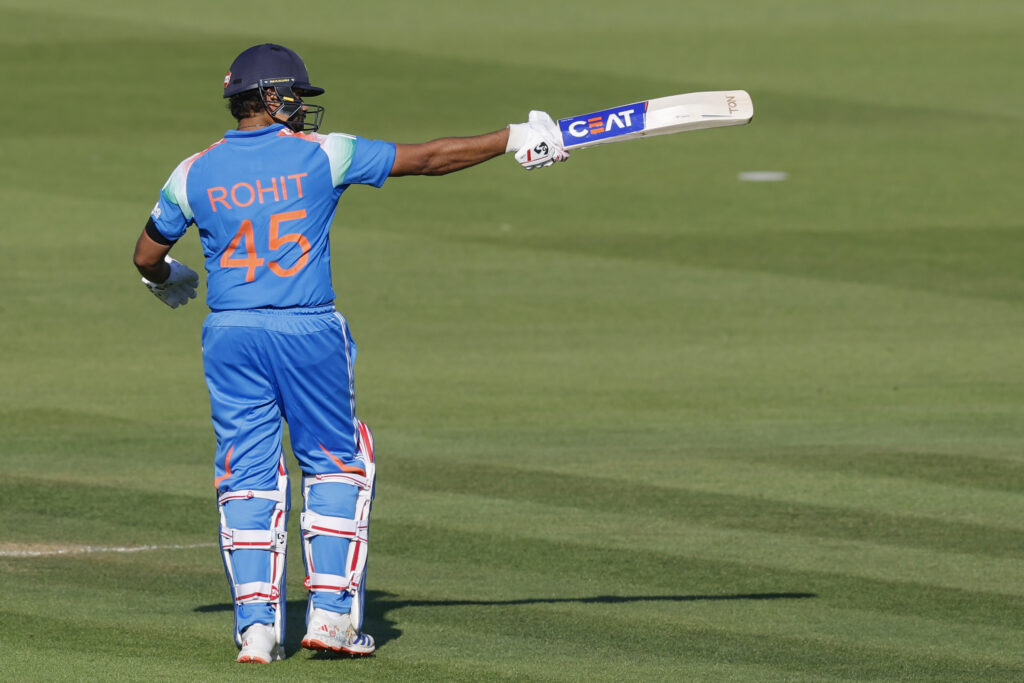
He went scott free in the 8th over when he hit Josh Tongue for a couple of boundaries in the 8th over and never looked back since then. The 147-run opening stand between him and his skipper is the third best opening stand for India.
The 183-run partnership between Ajinkya Rahane and Shikhar Dhawan at Birmingham in 2014 is at the top and the 150-run stand between Sourav Ganguly and Sachin Tendulkar at The Oval in 2007 being the second.
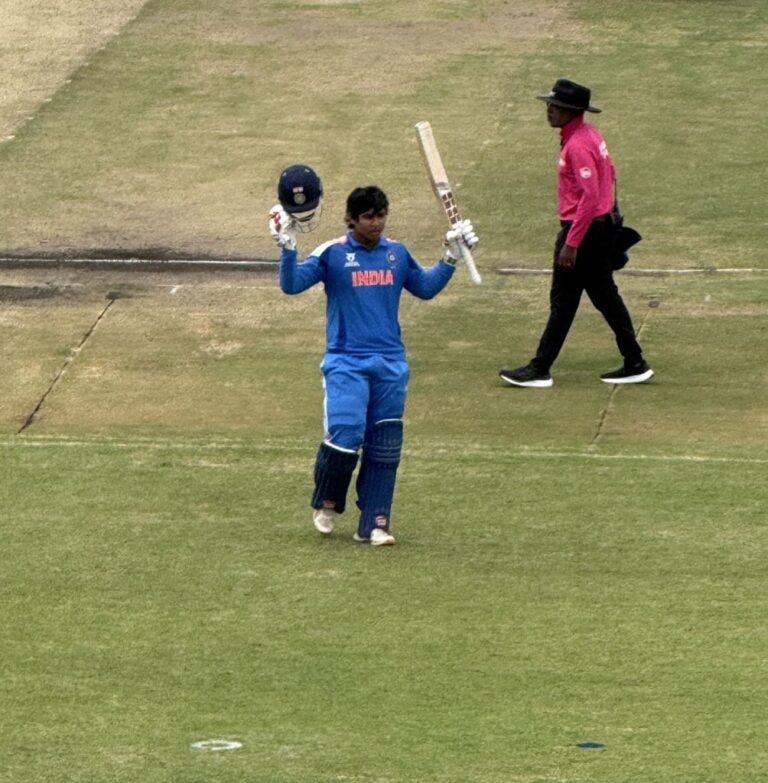
Even after the Indian skipper’s departure, Rohit carried his good form with his old mate, Virat Kohli and added 113 for the second wicket. When Jacob Bethell beat the Mumbaikar on the sweep to knock him over, the scoreboard showed 138 beside his name.
He became the first ODI centurion of India at The Lord’s Cricket Ground, becoming the highest individual run-getter among Indian openers in England, breaking his previous record of 137* against England at Nottingham in 2018. This 138 is also the highest score by any visiting opener at Lord’s, surpassing Chris Gayle’s 132* way back in 2004.
While Rohit alone broke plenty of records, the Indian team also joined him despite the series defeat of 1-2. 360/7 made by India is the highest score by any visiting team at Lord’s. This is the third highest total by any visiting team in England. 398/7 by New Zealand at The Oval in 2015 and 361/7 by Pakistan at Southampton in 2019 have bettered it. 360 is also India’s second-highest total in England after 373/6, which they scored against Sri Lanka in Taunton in 1999.
India may have had the previous records on a positive note, but England have also been brilliant in the Lord’s ODI. Their 387 is not only the highest ODI team total at The Lord’s, but it is also the highest List A total in the venue, surpassing Nottinghamshire’s 368/2 against Middlesex in 2014. Ben Duckett’s 141 is the highest individual score at the venue in ODIs, going past Viv Richard’s 138* in the 1979 World Cup final and Rohit equaled the all time great in the next innings.
Joe Root has not been dismissed in the entire series and has scores of 76, 99 and 74*. His 249 is the highest score by any batter without being dismissed in a bilateral series, bettering his teammate Jos Buttler who scored 248 against Netherlands in an away series in 2022.
India struggle without Bumrah
India got a jolt ahead of the third ODI as their talismanic bowler Jasprit Bumrah got ruled out with a knee injury, and that had a fatal effect on them. The relatively inexperienced duo of Prince Yadav and Gurnoor Brar conceded runs lavishly.
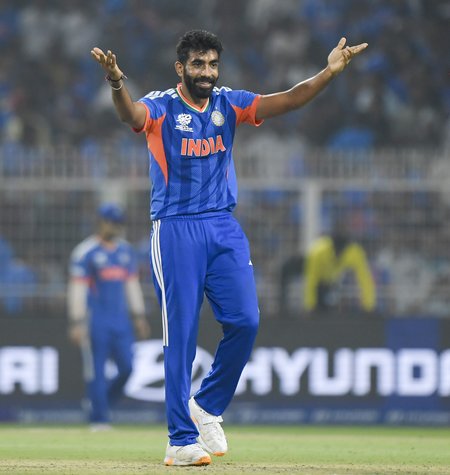
Brar gave 97 runs away in his 10-over spell becoming the third most expensive bowler for India in an ODI. Bhuvneshwar Kumar (1/106 vs South Africa at Wankhede in 2015) and Vinay Kumar (1/102 vs Australia at Bengaluru in 2013) are the only ones to concede over 100. This once again exposed the team’s lacunae as they lose their effectiveness without Bumrah in a game.
But there are plenty of positives to take from India’s point of view. The team’s batting once again clicked in foreign conditions. Rohit Sharma (39 years and 80 days) became the oldest centurion of India in ODI cricket, surpassing Sachin Tendulkar (38 years and 327 days vs Bangladesh in Mirpur in 2012) and showed that he is still very much relevant for the opening spot in ODIs.
Another veteran, Virat Kohli, notched up a couple of fifties in the series. One of India’s worries would have been their two batting greats being one-format players with limited game time, but they showed they are still at their best to deliver.
India included Shivam Dube as an all-rounder in the set-up with both Hardik Pandya and Nitish Kumar Reddy getting ruled out of the series. Dube failed to impress, and that laid more emphasis on the importance of Hardik and NKR staying fit. Even Washington Sundar’s place in the team is also questioned as he consistently failed in the white-ball tour.
Have India moved on from Jadeja?
Harsh Dubey’s inclusion as a replacement for an injured Sundar has indicated that the management has moved on from Ravindra Jadeja from ODIs. Now Axar Patel’s replacement for the 2027 World Cup is a tough find. Sundar not being at his best and Harsh being naive in international cricket have raised questions.
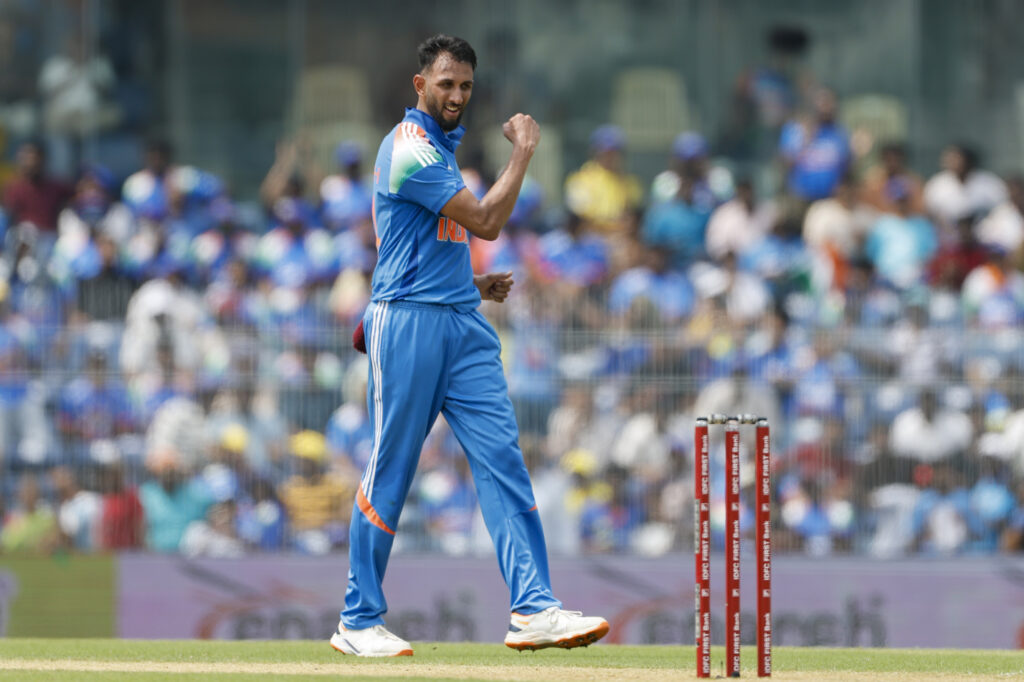
Among the pacers, a good sign is the dot ball number of Prasidh Krishna. He has bowled 106 dot balls across three ODI games. He is known for hitting the deck hard using his lanky stature and will be useful in the South African conditions. The same thing was expected from Gurnoor Brar, but he had a horrible Lord’s ODI.
Plenty of questions have surfaced. Some answers showed glimmers of hope but a lot of things are there to ponder for the Ajit Agarkar-led selection committee and the Gautam Gambhir-led support staff bench. India’s next ODI assignment is more than a couple of months away. In the home series against West Indies, a few more experimentations are expected. The management would want to have a settled core for the 2027 World Cup, as they had in 2023.
For more news & updates, follow The Crichub on Instagram, X and YouTube