By Anirudh Nair in Dublin
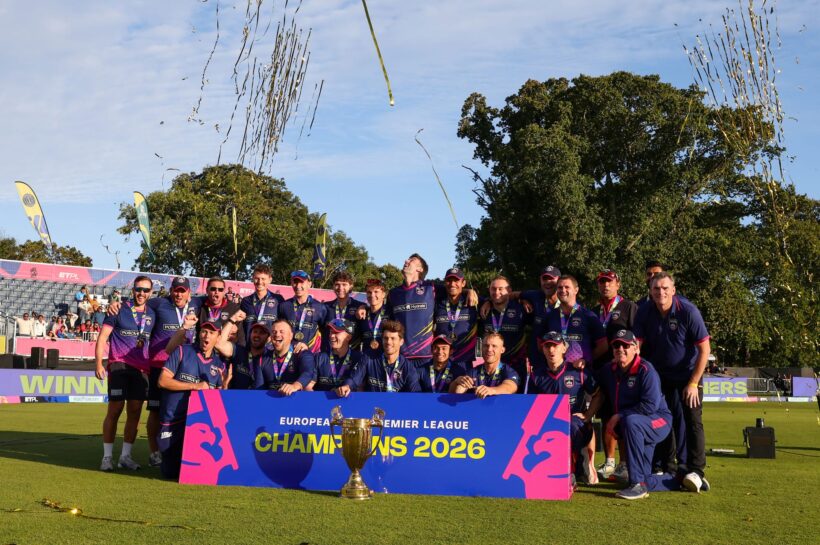
A couple of weeks have now passed since Edinburgh Castle Rockers were crowned champions of the 2026 edition of the European T20 Premier League (ETPL), giving the inaugural season of the competition some time to settle.
Across 25 days and 32 matches in the Netherlands and Ireland, the ETPL offered a glimpse of what European cricket could look like when local talent is given the opportunity to share the stage with established names from the Full Member nations.
𝐓𝐡𝐞 𝐜𝐫𝐢𝐜𝐤𝐞𝐭. 𝐓𝐡𝐞 𝐜𝐡𝐚𝐫𝐚𝐜𝐭𝐞𝐫𝐬. 𝐓𝐡𝐞 𝐜𝐡𝐚𝐨𝐬. 𝐓𝐡𝐞 𝐜𝐚𝐦𝐚𝐫𝐚𝐝𝐞𝐫𝐢𝐞. 🥰#ETPL Season 1, what a journey. 💙🏏 pic.twitter.com/BycegIjwIg
— European T20 Premier League (ETPL) (@etplofficial) September 25, 2026
Edinburgh Castle Rockers eventually emerged as the champions after defeating the Belfast Wolves in the final.
Mitchell Santner put his Edinburgh side in to bowl first, and Belfast were restricted to 150 for four, with Ireland’s Tim Tector providing the bulk of the resistance with a score of 82.
Belfast pushed Edinburgh on the back foot early in the chase, but the result was in no doubt once Andries Gous got going for the table toppers. The United States batter scored an unbeaten 90 to guide the Castle Rockers to the ETPL crown in the competition’s debut season.
But while the final provided the tournament with its champion, the larger story of the ETPL’s first season lay in the performances of the players who have traditionally operated outside the spotlight of franchise cricket.
European talent takes centre stage
Most franchise T20 competitions feature the usual journeymen from the big Full Member nations as their star players, both in terms of performance and as a draw for crowds. The ETPL, however, showed that formula can be changed with great success, as local European talent took the spotlight throughout the competition.
Scotland’s Brandon McMullen was central to Edinburgh Castle Rockers’ terrifying six-match winning run and eventual title, producing a commanding all-round performance with 356 runs and three wickets.
The Netherlands’ star man Bas de Leede was someone with great expectations riding on his shoulders, and he rose to the occasion on his home turf for the Amsterdam Flames. De Leede scored 320 runs and took five wickets, four of which came in a crucial win to send his side to the qualifier round, when he returned figures of four for six.
Looking at the bowling exclusively, Ireland spinner Matthew Humphreys starred for Belfast Wolves with 15 wickets, hitting a serious stride as soon as the competition moved to familiar conditions in Ireland, where he picked up 13 wickets in six games.
The skill was not limited to the Europeans in the competition. Associate players from around the world also got their opportunity to shine.
Canada’s Yuvraaj Samra, who made headlines earlier this year for his ton at the T20 World Cup, played a solid opening role for the Amsterdam Flames, outscoring teammate and Australian icon Steve Smith in the tournament.
And, as mentioned earlier, the United States’ Gous won Player of the Match in the final for Edinburgh.
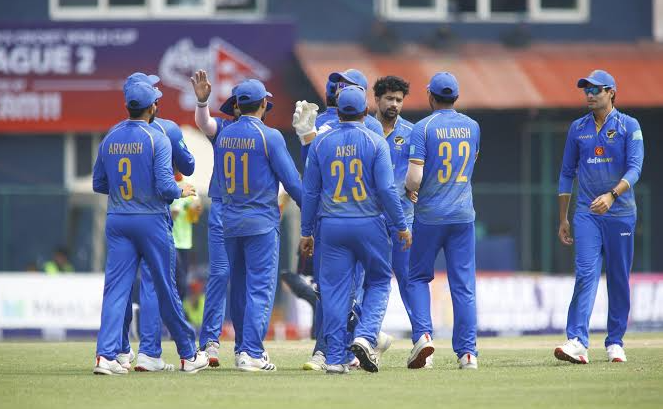
The champions, in fact, featured six local players from Scotland, six from other European and associate nations including Ireland, USA, Italy and Samoa, and only five from the traditionally big Full Member teams.
“What’s wonderful is it goes to show you the potential that the players have,” said league co-founder and Bollywood actor Abhishek Bachchan about the performance of Edinburgh’s diverse squad, speaking exclusively to The CricHub.
“Edinburgh, I think, started the tournament very, very strongly. They hit a bit of a speed breaker when they reached Malahide, but to pick it up and win it, they’ve been very, very consistent, (a) very, very strong bowling side.”
A platform for associate players
The ICC announced its new format for World Cups moving forward, which has seen associate nations getting sidelined with limited spots and opportunities to qualify for the final tournament. The decision was met with outrage by these nations.
With the visibility of associate players ever increasing, not just through the ETPL but also through the multiple franchise tournaments held in a calendar year, an argument could be made for the ICC to reconsider its stance on alienating associate nations.
“100%. I think there’s so many good associate players out there,” said USA and Edinburgh Castle Rockers batter and Player of the Match from the ETPL final, Andries Gous, when asked if the associate players had done enough to make a statement for the ICC to notice, speaking exclusively to The CricHub.
“They just needed that opportunity. We saw Brandon McMullen, he’s world-class. I’ll take him in my team any day, in any team. I think it’s just this platform for them is so crucial and the way they’ve all stepped up to perform and they all perform in crucial moments as well everywhere.
“So I think this is just the start for the associate players and hopefully there’s more tournaments coming where they can show their name.”
ETPL brings balance between bat and ball
For Bachchan, another aspect that helped the ETPL stand out was the balance between bat and ball.
“What I’ve loved about the ETPL, and I think what really sets it apart from all the other wonderful T20 tournaments, is that it’s not just a batting track and it’s not just a batter’s game,” said Bachchan on what he believes makes the quality of the ETPL stand out.
“If I’m not mistaken, we’ve had five bowlers who have had five-wicket hauls, which is a record in T20 cricket, I believe. That just goes to show that this is a very equal game.
“It’s not just a game where you come and smack it out of the park. There’s a lot more strategy involved. There’s a lot more skill involved and I think that’s so nice because it kind of gives T20 a new facet and I think that’s what people have appreciated.”
Finding an audience in Europe
The secondary function of the ETPL, just as with any other franchise cricket tournament, was to maintain a consistent level of attendance throughout the competition.
Europe, a region of the world known for its vast and secular sporting heritage, rooted in centuries of history, will always be difficult to penetrate with a new sport, especially something as complex to learn and operate as cricket.
But across the two venues in Voorburg and Malahide, the ETPL certainly attracted a healthy number of supporters, not just from the cricket-savvy South Asian and Commonwealth communities, but also from local supporters in the Netherlands and Ireland.
“I think hopefully next year now that they’ve seen it’s been successful, hopefully next year can be even bigger,” said Gous, looking back at the support throughout the ETPL.
“I think there’s such a big market for this and to see the Irish and the Scottish and the Dutch boys, how much they love this tournament and how well they did as well. So it’s been really good to see and hopefully now that the tournament has been such a success, hopefully from now on the fans would come out even more and support the game.”
‘Hopefully upwards and onwards’
The inaugural season may now be over, but the ambition surrounding the ETPL is already focused on what comes next.
“Hopefully upwards and onwards,” said Bachchan on where he sees the league going in the future.
“I’ve always believed in that. I think we have to dream big. I think we had an audacious dream and I’m very happy and relieved that we managed to finish season one.
“So elated with the kind of response that we’ve got, with the support that we’ve got, and can’t wait to get on to the next season, (the) work has already started. So like I always say, dream big, believe in yourself, back yourself, and work hard to achieve it.”
A couple of weeks removed from the conclusion of the debut season, the biggest takeaway from the ETPL is that this is a part of the world that cricket cannot ignore, and one that definitely cannot ignore cricket.
The inherent passion for sports that dates back generations across the European continent will always draw people towards whatever is new and exciting, like the ETPL, getting them itching to pick up a bat and ball and driving them to eventually master the craft.
That drive extends to the players from the region as well, who have shown their mastery on the biggest platform, surrounded by their own supporters.
A platform is all they needed.
As we have seen in other sports, such as football and in the FIFA World Cup earlier this year, underdogs such as Cape Verde took that platform and made it their own.
With the talent on display in the ETPL, maybe the ICC can rethink and give the platform back to the associate teams, and embrace cricket as the global game it truly is.