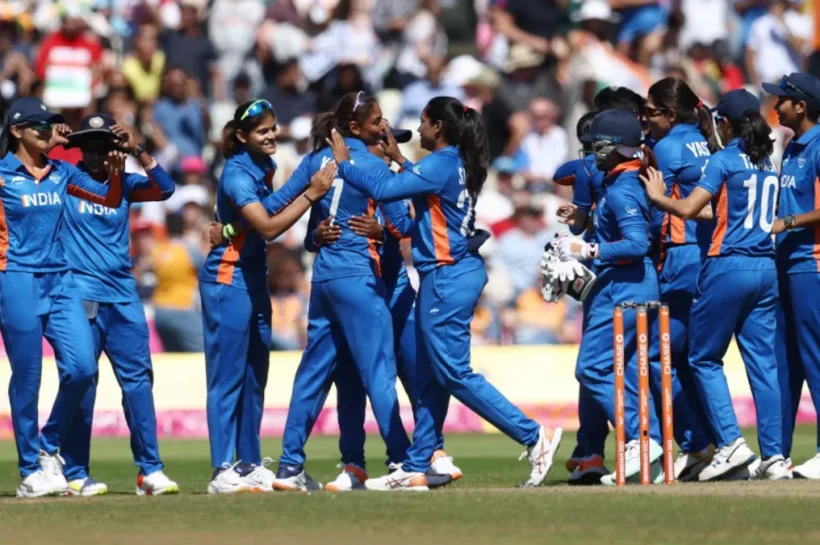
As the 10th edition of the Women’s Asia Cup getting underway in the United Arab Emirates later this week, all eyes return to the team that has defined this tournament since its inception, India. Carrying rich history and exceptional individual talent into Dubai, the Women in Blue arrive with high expectations. However, in a rapidly evolving Asian landscape where the gap between teams continues to shrink, securing the trophy will demand precision from the very first ball.
India’s unmatched record in Women’s Asia Cup
For nearly two decades, the Women’s Asia Cup was virtually synonymous with Indian victory. Winning seven of the first nine editions, spanning four 50-over titles and three T20 crowns, India established an unshakeable continental hegemony.
Yet, recent tournaments have proven that dominance can no longer be taken for granted. Bangladesh broke India’s streak in a historic 2018 final, and Sri Lanka pulled off a dramatic upset in the 2024 final. Falling short in that summit clash added fresh motivation for India, who enter this edition determined to reclaim their place at the top of Asia.
Also read: Breaking the Mold: The evolution of Women’s Asia Cup
India women: A blend of experience and youth
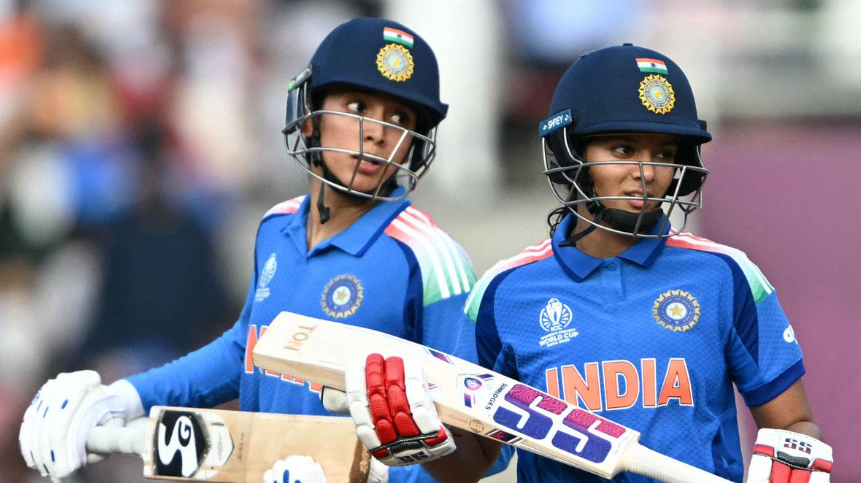
India’s hopes rest on a powerful blend of experience and youth. At the top, vice-captain Smriti Mandhana and Shafali Verma give India one of world cricket’s most dangerous powerplay pairings. Mandhana offers fluent strokeplay and controlled tempo, while Verma’s fearless aggression can pressure bowlers from the outset. In the middle order, captain Harmanpreet Kaur provides leadership, composure, and proven finishing power in high-pressure moments. The injury to Jemimah Rodrigues is a big blow for them and the their hopes relying on Bharti Fulmali and Gunalan Kamalini for keeping the scoring rate steady through the middle overs.
India’s lower order and bowling unit bring similar strength. Deepti Sharma offers all-round reliability, pairing disciplined off-spin in key overs with valuable stability as a lower-order batter. Behind the stumps, Richa Ghosh adds explosive finishing power, with the ability to change tight matches through clean boundary hitting. Leading the pace attack, Renuka Singh Thakur remains India’s main strike option, using late swing to trouble top orders early. Young Kranti Gaud will also draw confidence from her Lord’s heroics, while the spin options of Shree Charani and Radha Yadav give India the flexibility to respond to different match situations.
The group dynamics
Placements in Group A pair India with arch-rivals Pakistan, alongside emerging nations Thailand and Hong Kong. While the group stage presents a clear path forward, the knockout stages promise stern tests. Defending champions Sri Lanka—spearheaded by the lethal Chamari Athapaththu—have proven they can defeat anyone on their day. Meanwhile, Bangladesh and a rising UAE side continue to push top-tier nations with disciplined bowling and sharp fielding.
The Women’s Asia Cup is no longer a one-team procession. With associate nations narrowing the tactical gap and secondary powers growing increasingly fearless, India’s path to an eighth title requires absolute consistency. If their core stars fire together, the Women in Blue hold every key to lifting continental gold once more.
For more news & updates, follow The Crichub on Instagram, X and YouTube