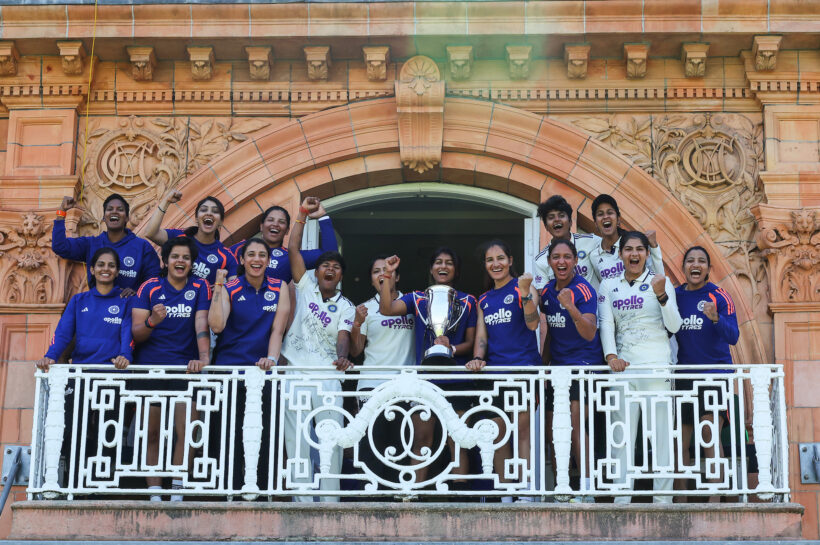
The Home of Cricket – Lord’s Cricket Ground hosted its first Test match in 1884. It was a time in the UK where women were not even allowed to vote. Autonomy was a rarity. It was only just two years prior that the government decided that women could be their own thing after marriage with the 1882 Married Women’s Property Act, finally allowing them to personally own any assets following marriage rather than everything they owned belonging to their husband.
The Rachael Heyhoe Flint effect
In 1973, it was a much different world. Voting rights were gained, women began joining the London Stock Exchange, and we had the first Women’s Cricket World Cup, two years before the men. In 1999, at the dawn of a new millennium, society in the UK looked very similar to what it is now in terms of equality. But that was the year the first women were granted an MCC membership, former England captain and pioneer Rachael Heyhoe Flint being one of them.
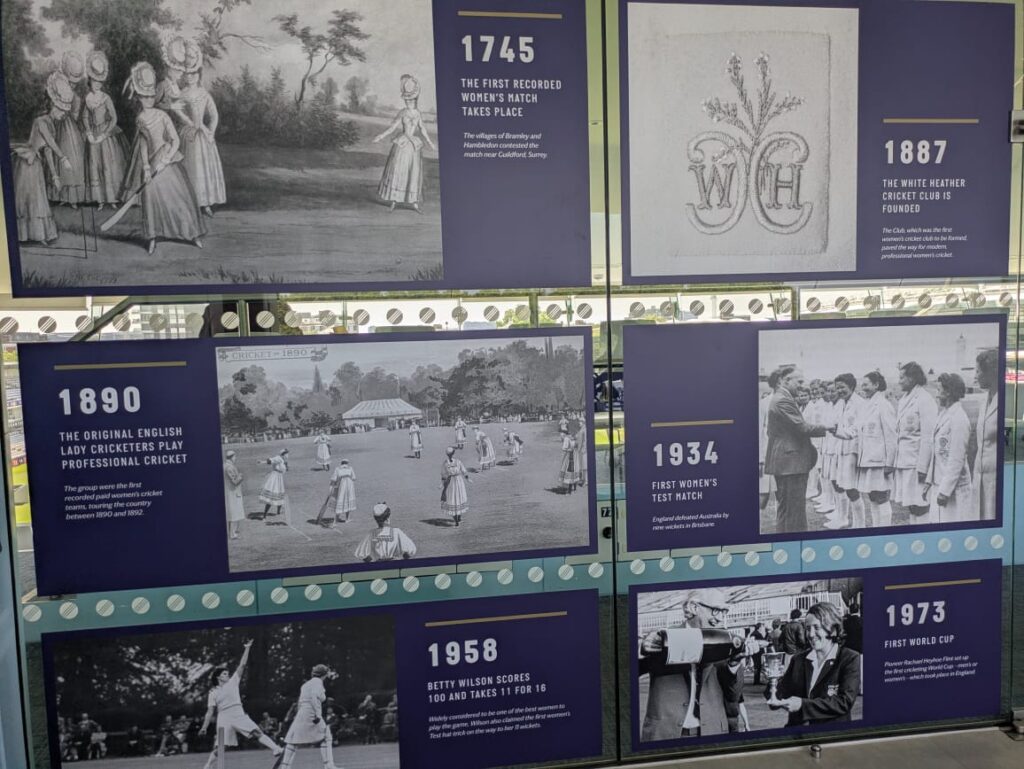
She played for England for 22 years, and gave most of her life to the game after retirement as well, fighting for the basic right of respect from the cricketing big cats whose minds were still in the 1800s as the world around them evolved. Now Heyhoe Flint has her name all over the ground where she fought with those “male chauvinist pigs”, as she put it herself.
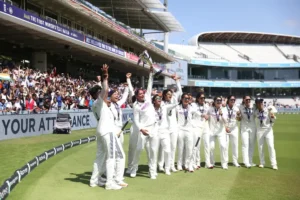
That ground hosted its first Women’s Test match on July 10, 142 years on from the first men’s one. England played India in this landmark fixture, with both sides still trying to rid themselves of the scars of the disappointing ends to their Women’s T20 World Cup campaign. England, still far more wounded than India, having to make the turnaround from their final defeat to Australia to the starkly opposite strenuous nature of red-ball cricket in a matter of days, were crushed by India, who at least had around two weeks of preparation following their elimination.
A historic win for India at Lord’s
After three days and a morning, India secured a mammoth 270-run victory, the third-largest win in the Women’s Test format. “A perfect match” is what head coach Amol Muzumdar said. A start with the bat, with fifties from Smriti Mandhana, Harmanpreet Kaur and Deepti Sharma, brought India to 285 by the end of day one. Kranti Gaud led a massacre on day two, taking a five-wicket haul to become the first woman to join the iconic Lord’s Test honours board. Her 5/37 shut England down at just 170 before tea on Saturday.
India went into day three in a commanding position, leading by 269 runs, but Lauren Bell’s early wickets of Mandhana and Jemimah Rodrigues put India on the back foot, and Yastika Bhatia replied in style.
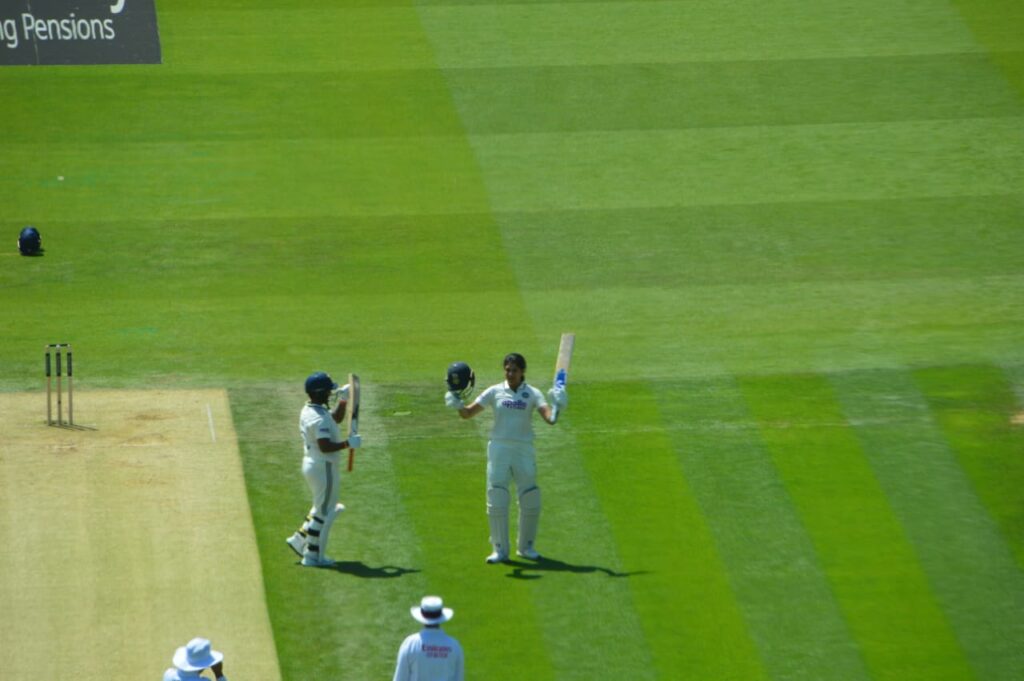
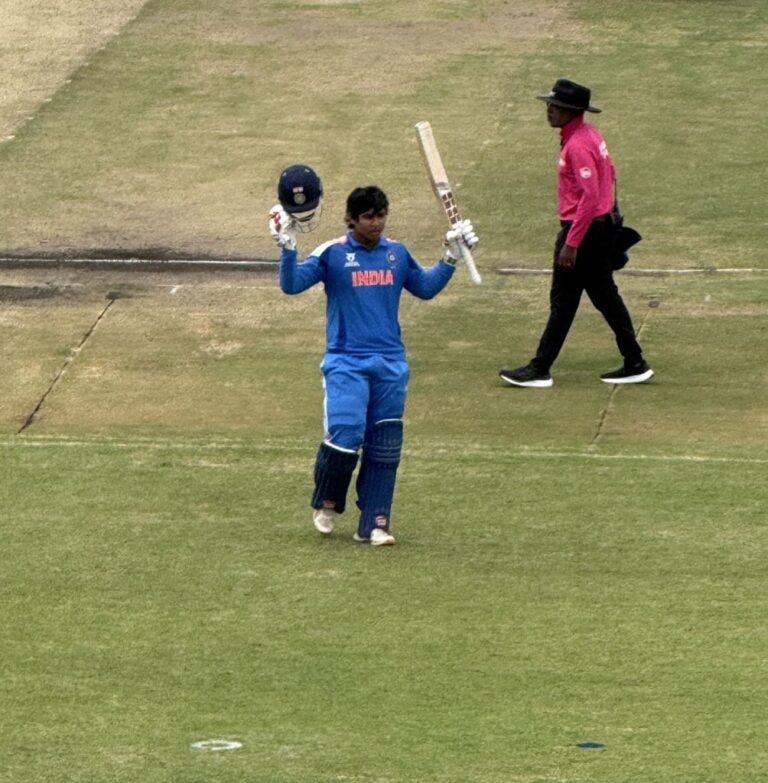
Bhatia took the English gauntlet to town and became the first woman centurion in a Lord’s Test match, joining Gaud on the honours board. Her innings of 113, aided by a lower-middle blitz by Richa Ghosh, brought India up to 341/7 before Harmanpreet declared the innings, setting England a target of 457.
Gaud, along with Sayali Satghare and Sneh Rana, toppled England’s batting, effectively ending the chase by the end of day three, as England stood on 130/6. It wasn’t all a horror show for England, as some individuals stood out.
Most notably, Sophie Ecclestone had an expectedly great game with the ball, taking 5/118 in the second innings and becoming the first Englishwoman to go on the honours board. She also had a rare contribution with the bat, scoring a maiden international half-century in the chase. She wasn’t alone with the fifties as the keeper batter scored one in each innings, a lone effort that did go in vain.
Legends bid adieu
There were also heavy emotions in the England camp as they bid farewell to two legends of the English game. 2017 World Cup’s player of the tournament Tammy Beaumont and England’s all-time highest-capped women’s player and World Cup-winning captain Heather Knight announced that the Test match was their last dance in international cricket.
Unfortunately for the two greats, the ending was not as much of a fairytale as they would have hoped. But to send off these pioneers, the Indian team formed guards of honour as they walked back to the pavilion for the final time in their storied careers.
It took India roughly 90 minutes on the final day to finish the job off. The off-spin of Sneh Rana and Deepti Sharma swiftly did the job despite Ecclestone’s attack and fifty, and India bowled them out on 186, securing the 270-run win in the historic game.
What we learned
Talent not the issue: With this victory, the Indian team has shown they are more than capable of utterly dominating a good opposition, an aspect nonexistent in their T20 World Cup campaign, with Harmanpreet directly admitting they need to do better against those teams.
Thus, this result proves they definitely can do better, and not just. But this positive lies within the longer formats, at least as of now. The time for consolidation among the batters and bowlers gave India the space they needed to flourish.
Gaud bowled just six overs in the T20 World Cup, taking no wickets, and not being given a real chance in the games against Pakistan and Australia, bowling just one in each of them.
She was the pick of the bowlers in this game, finishing with match figures of 7/91, winning player of the match, and literally having her name go down in history. All in all, she bowled 28 overs in this match, and while there were some stutters early in her spells with full tosses and varying lengths, with time through the game she found the ideal rhythm necessary and became an unplayable threat.
The same goes for India’s middle order. The problem of a low strike rate is never a problem in red ball cricket, and just like Gaud’s bowling, the batters got the breathing room necessary to step. The buildup of an innings from the entire order of Bhatia, Jemimah Rodrigues, Harmanpreet and Ghosh allowed all four to make a mark at some point in this game. Bhatia’s century innings in particular was a masterclass in constructing confidence and thriving on it.
At stumps on day two, Bhatia went back in on 39 off 73 balls, striking at 53.42. Coming into the morning of day three, she added 74 runs in 85 deliveries, striking much better at 87.06. But that latter spell of confidence and eventual ton would not have been as free-flowing without that patient residence she showcased in the final session on Saturday.
“I was given a clear message that you have to play according to the ball. Like whatever your game is, you have to play that only,” said Bhatia.
“I was feeling that ball is coming on better on the bat. So I was trying little more and also like (there were) wickets in hand, we were in good position. So I was thinking that if we accelerate here, get some runs at good pace, it will be good.”
This longer format expertise is what got India over the line in the 2025 ODI World Cup. But the strategy for these does differ, and after this T20 World Cup Campaign should have been the needed wake-up call to rethink strategy for the short format, which both Harmanpreet and Muzumdar have emphasised. Only then can India be the all-format juggernaut they are capable of.
A messy World Cup for England
A World Cup hangover: Imagine being the English Cricket team. For months you have been preparing to host a T20 World Cup for the first time in 17 years.
The expectations of being unbeaten at home World Cups across four editions are riding on your shoulders. All you have been playing is T20 cricket, and that effort pays off and gets you a perfect run to the final. You play Australia at the Home of Cricket, with overwhelming support riding behind you; all the work you have put in this last half year- will it be worth it?
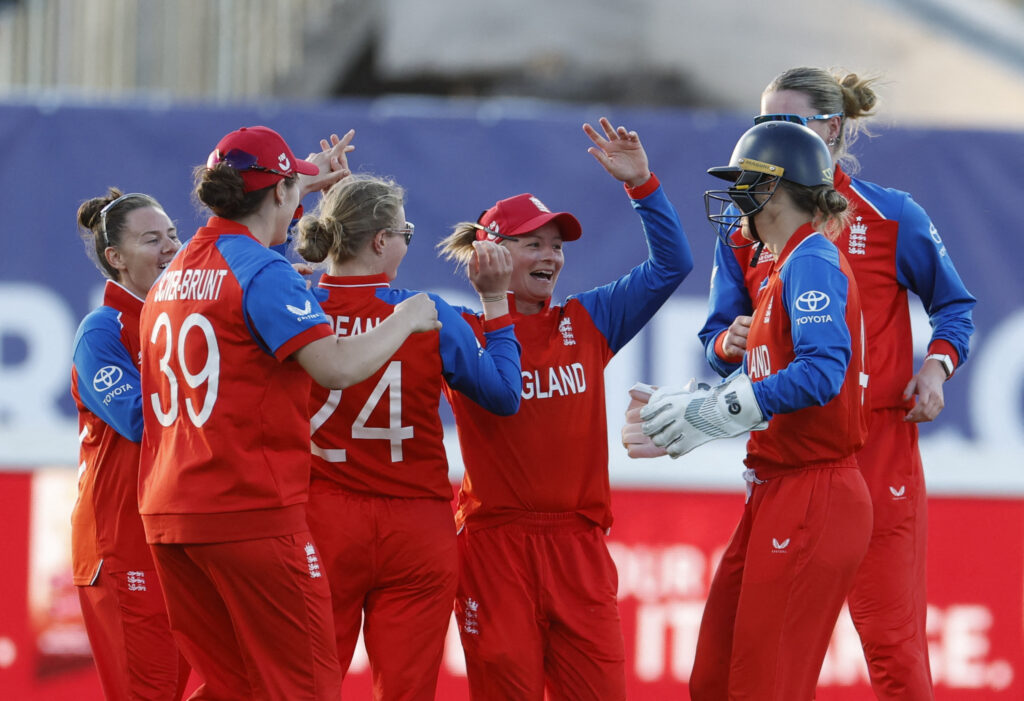
Unfortunately, it wasn’t, and they were pummeled by an ever-so-domineering Australian side. Now, after this crushing heartbreak, you get called back to the same ground five days later to play a completely different form of cricket in the sweltering sun. A defeat was just written in the cards for England.
It was a messy performance to say the least, with a lack of game plan with ball and bat, or at least a lack of consistent application. England’s first innings with the ball made India struggle. Issy Wong using her slower swing and the discipline of debutant Mady Villiers really trapped India’s batting, comfortably cutting their first innings by 75 runs, as India went from 190/3 to 285 all out. But that was all that was good for them.
The batting collapse could still be owed to India’s fine bowling, but the T20 mode drilled into the English batters could have been a factor. Amy Jones’ two half-centuries were the best batting performances of the game, but observing closely, Jones’ strokeplay was not for the red ball, as an itch to play more attacking strokes kept creeping through. Her premature dismissals can in fact be chalked up to that itch, but that is not her fault.
England had mentally checked out right after that T20 World Cup final defeat, and that showed on the field. The purpose of this game for them was larger than a simple win or lose, but more about taking a massive step forward for women’s cricket. The performance from Gaud, Bhatia and Sophie Ecclestone would usually just be the norm in any other Test match.
But in this game, and in that venue, those performances will forever be written in history. The impact their names being on the honours board will have not just for the women’s game, but for cricket as a whole, will be monumental.
“It’s a great feeling. Like I always believe that we are at a good position to inspire young girls and boys,” said Bhatia about her name being on that honours board.
“I think that it’s our responsibility as well to, like, be in a good performance and carry ourselves well on and off the field. So I think it does inspire other cricketers, other players. So I think it’s a big thing.”
For more news & updates, follow The Crichub on Instagram, X and YouTube