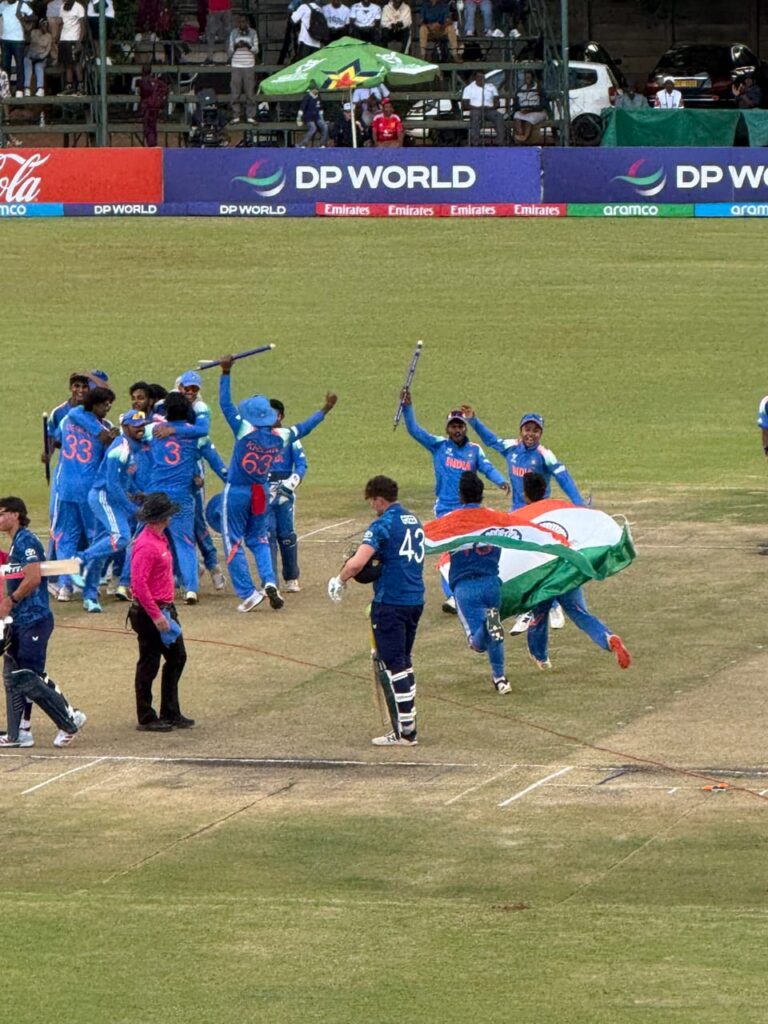
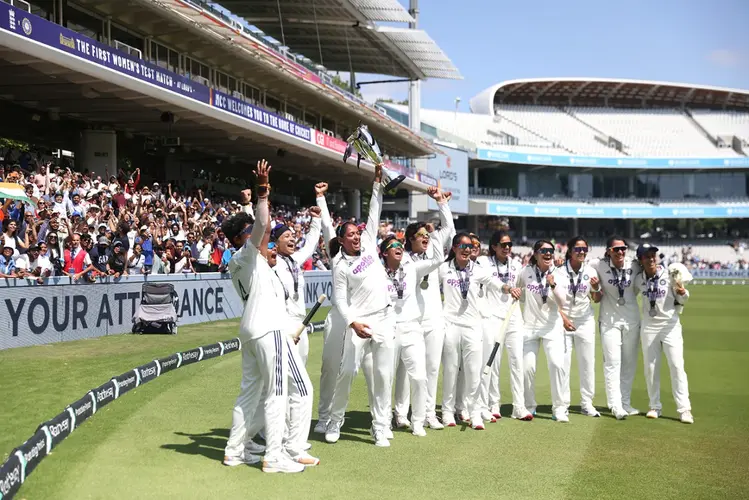
India’s monumental 270-run victory over England in the historic women’s Test match at Lord’s marked a defining watershed moment in international cricket. While the scoreboard reflected a dominant four-day display by India women, the triumph was built far beyond the home of cricket. India’s victory at Lord’s was no fluke. By pairing the structural backing of domestic multi-day cricket with clutch performances from both seasoned leaders and rising stars, the team established a new benchmark for women’s red-ball cricket globally.
1. The domestic red-ball catalyst
The bedrock of India’s success was the revival of the Senior Women’s Inter-Zonal Multi-Day Trophy. Years of playing predominantly white-ball formats often left players adapting to red-ball nuances on the fly. However, eight of the XI players at Lord’s entered the match with substantial first-class experience under their belts.
This domestic exposure developed the physical and mental stamina needed for four-day Test cricket. Batters became more disciplined in leaving balls outside off stump, while bowlers such as Kranti Gaud and Sneh Rana learned to build long, attacking spells instead of relying on short, defensive attacks. By contrast, England women struggled without a domestic first-class structure for women cricketers, making the quick shift from white-ball formats to the red ball a difficult challenge.
2. Kranti Gaud’s match-defining spell
Player of the Match Kranti Gaud set the tone early, exploiting the green-tinged surface and using Lord’s famous slope to her advantage. Her incisive 5 for 37 bowled England out for 170 and gave India a vital 115-run lead. She finished with seven wickets in the match and the ‘Player-of-the-match’ award, showing how domestic multi-day workloads can translate into success at the highest level. The selection was also a strategic masterstroke by the team management, who backed the right bowler for the conditions despite her mixed Women’s T20 World Cup campaign.
3. Yastika Bhatia’s historic century
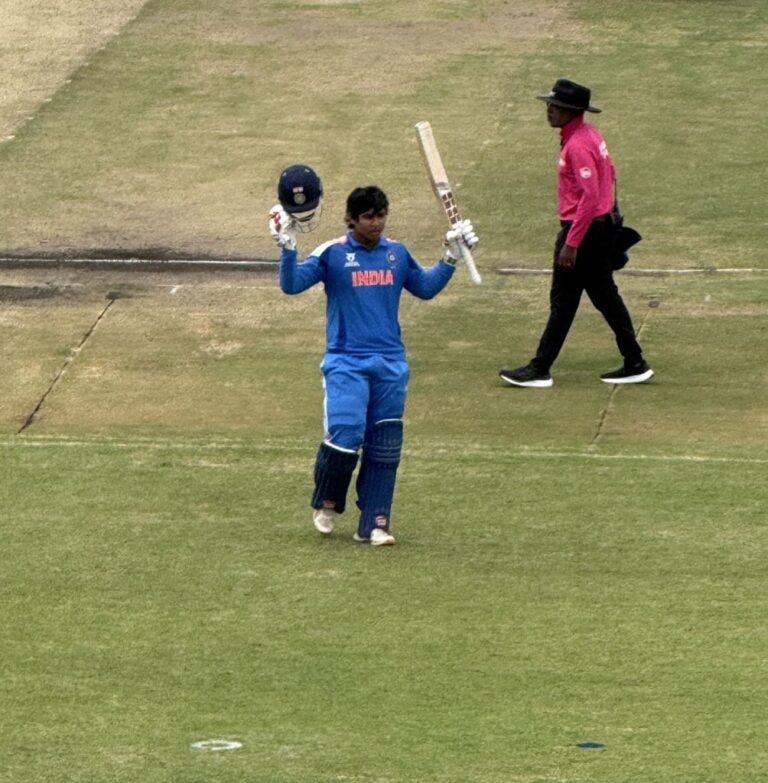
Wicketkeeper-batter Yastika Bhatia delivered a masterclass in the second innings, scoring a patient 113 to become the first female cricketer to score a Test century at Lord’s. Having logged 13 first-class appearances leading into the tour, Yastika showed remarkable composure, batting England out of the game and allowing India to declare at 341/7 to set a daunting 457-run target, and added her name to the prestigious Lord’s honour board.
4. Top-order stability and all-round depth
Vice-captain Smriti Mandhana provided rock-solid foundations at the top, scoring 83 and 70 across both innings to blunt England’s new-ball attack. Complementing the top order was India’s depth lower down, with Deepti Sharma (57) and Richa Ghosh (50*) chipping in with crucial runs. When it came to defending the total, Sneh Rana led the spin attack with a decisive 4-42 in the fourth innings, breaking key partnerships as England crumbled under relentless pressure.
5. Sharp leadership and adaptation
Getting eliminated early from the T20 World Cup worked in India’s favour. It allowed the India women’s team to fully adapt to playing with red balls in local conditions. On the field, Captain Harmanpreet Kaur (who also scored a vital 58 in the first innings) managed bowling rotations with precision, set aggressive field placements, and kept relentless pressure on the hosts.
For more news & updates, follow The Crichub on Instagram, X and YouTube