17th of July, 1896. At the Old Trafford Ground in Manchester. The Aussies concluded their innings on the second day for 412 against England in the second test match of the Ashes test series. Debutant KS Ranjitsinhji, the famed cricketer after whom the Ranji Trophy is named, walks out at No. 3. He went on to score a half-century in the first international innings he ever played, and an unbeaten 154 in the second innings of his international debut.
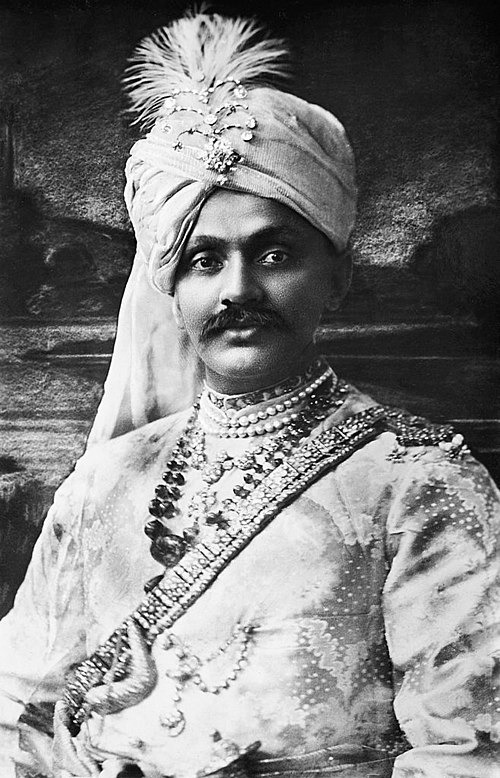
England lost that game, despite giving them a fighting chance at winning. With this, he gave the Indian cricket world a wonderful start en route to becoming a cricketing giant, despite playing for the Three Lions.
That is the kind of thrill you expect from a great cricket match: moments of fabled bravery, powerful determination, bowlers targeting 160 km/hr deliveries at the batsmen, who are at the receiving end, and pushing those balls away from them; any miss or mishit would have seen them getting bowled.

Be it WG Grace in the 1890s, Sir Donald Bradman in the 1930s, Dennis Lillee in the 1970s, these heroes were born from the gentleman’s game, long before one-day cricket was even a thing. It was only in 1975 that one-day cricket gained traction with the first-ever World Cup, won by the West Indies.
Tests losing relevance?
Test cricket has always been dying, as is commonly known. With the ever-growing number of T20 and franchise league events, no one really has the patience to watch long 5-day matches anymore.
They say Test matches have been losing relevance with the evolution of cricket as a fast-paced, action-packed multi-crore entertainment package. You would be completely wrong.
In the fourth and final game of the 2020-21 Border-Gavaskar Trophy at the Gabba, Brisbane, the Indian side managed to pull off an amazing feat, chasing 328 runs with an inexperienced squad against bowlers like Mitchell Starc, Pat Cummins, and Josh Hazlewood. They managed to break the “fortress Gabba,” where the Aussies hadn’t lost a Test since 1988. Will T20 cricket provide you with such a fighting spirit that these youngsters showed for five days rather than a few hours? I doubt it.
Test cricket has a legacy of more than 100 years. We hear our parents and grandparents ruminate about how glorious those matches used to be, how Virender Sehwag scored 319 at Multan, and how VVS Laxman and Rahul Dravid in 2001 formed the great wall, and defeated Australia after following on, a feat that was achieved only the third time then, in the history of cricket.
Can lucrative T20 take shine away from Tests?
T20, albeit more lucrative, can never match the fame of Test cricket. Among newer lovers of cricket, it has been seen that interest in Test cricket is falling. But since the introduction of the World Test Championship (WTC), the ICC has given a silver hand at fighting for its great survival, continuing its legacy. Heck, even South Africa got their first-ever ICC trophy in 2025, which was the WTC. Jokes apart, Test cricket will survive. It simply needs to.
The modern T20 game is always fixated on the skill and power of the batter. It has made cricket look so easy for the batsman. Getting 200 in 20 overs is child’s play; chasing that is even easier. It seems like the bowler has no role other than being a bowling machine. If the batsman gets out, it is often labelled as his fault; the bowler’s bowling skills are just not considered.
Test Cricket allows the fielding team to exploit the changing conditions of the pitch over five days and wage psychological warfare. Fast bowlers swinging the new ball is one of the fiercest sights in the game. The first ball to a batsman is always a bouncer – colloquially called “welcome bouncer”. Imran Khan alone took 40 wickets against India in 1982-83, in Pakistan.
Back in 1993, famous West Indian fast bowler Curtly Ambrose completely dismantled the indestructible Aussie batting lineup, claiming 7 wickets, while giving just one run in one of the most destructive spells in Test history. The West Indian bowling line-up in the 1980s and 1990s was known to wreak havoc on even the strongest batting teams. As far as the presence of bowlers like Malcolm Marshall, Joel Garner, and Michael Holding is concerned, every ball can be compared to a guided missile!
Muttiah Muralidharan, the Sri Lankan great, went a notch higher with 800 scalps. There have also been events of a bowler claiming all 10 wickets in an individual innings. Jim Laker in 1956 vs Australia, Anil Kumble vs Pakistan in 1999 and Ajaz Patel vs India in 2021.

Tests more challenging
As the game progresses, the pitch cracks and changes character. The fast bowlers are given a break, and the spinners are brought on to deal more damage. The late, great Shane Warne made an entire career out of this, breaking partnerships through his magical leg-spin deliveries. He claimed an incredible 708 wickets.
These have repeatedly proven that Test matches can be anyone’s game. One fine bowler ripping apart the entire batting order, or in another case, one batsman taking every bowler to the cleaners.
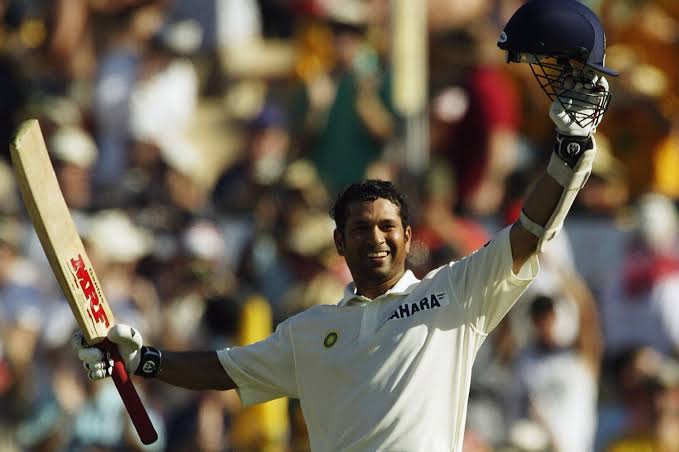
Test Cricket is the definition of slowing down in a time where three hours of frenzied hitting is becoming normal. Fancy sponsors, glowing LED stumps, songs being played after every boundary or wicket is taken – this is exactly how cricket is defined today. Test Cricket differs from this. It is an ode. An ode of glory or sorrow, often involving the same player. A lone warrior fighting to save his team. Sachin Tendulkar scoring 241* against Australia in Sydney, 2004, is a fine example of a hero standing tall against the likes of Brett Lee and Gillespie.
It also captures the tremendous heroics in a losing cause, like Sachin Tendulkar battling severe back spasms to score a heroic 136 against Pakistan in Chennai in 1999, only for his side to collapse when he got out.
So long as there are spectators who understand the mind game that ensues on a dust-ridden, cracked fifth-day pitch, with both bowlers and batsmen fighting for a hard-earned draw, and the sheer fatigue involved, there will always be hope in preserving the pure form of the game.
For more news & updates, follow The Crichub on X and YouTube