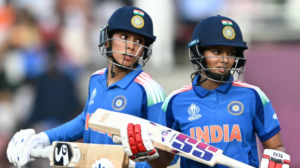
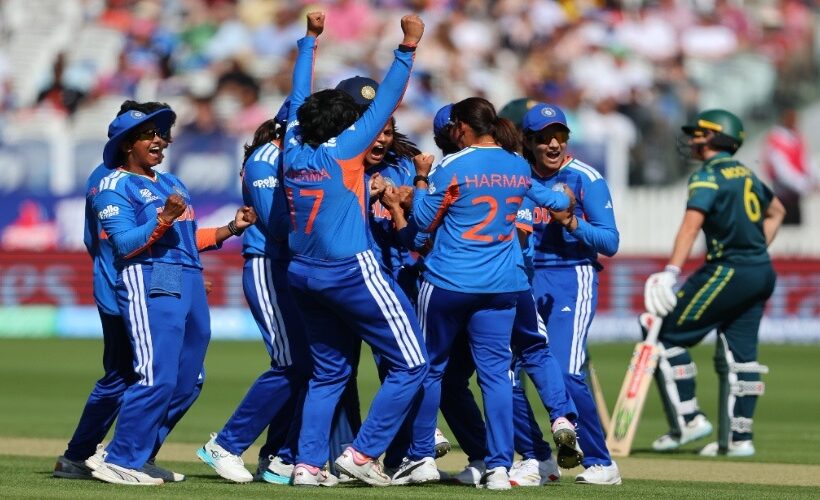
“The kind of cricket the Indian team has played in the last four-five years….that gap has narrowed and I just feel now at this moment, especially in T20 cricket, it’s just about whichever team is having a good day is going to win the match,” is what Smriti Mandhana said before India’s do-or-die group game against Australia at the 2026 ICC Women’s T20 World Cup.
Unfortunately for her and India, Australia were the ones who had the better day on Sunday, June 28, beating India by six wickets to knock them out of the T20 World Cup in England, extending India’s wait for their first Women’s T20 World Cup triumph. The expectations were incredibly high heading into the competition after India sealed the ODI World Cup on home soil in 2025. But the T20 game still is a different beast altogether, which India are yet to master.
India finished third in their group of death, beating Pakistan, Netherlands and Bangladesh but falling short of giants South Africa and Australia. Both captain Harmanpreet Kaur and head coach Amol Muzumdar insisted that a “rethink” of the T20 strategy needed to be done after India’s premature exit.
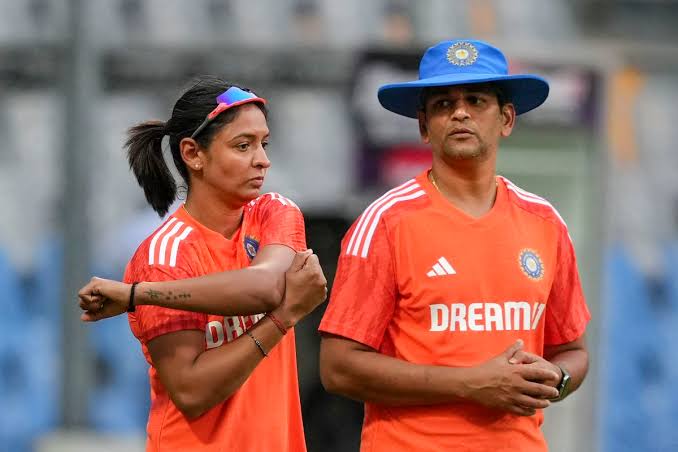
Whilst that may be partially true, India could have still easily kept themselves in this tournament, be it not for a few minor moments that became crucial defining moments for the ‘girls in blue’s’ fate.
What went wrong
The old adage that catches win matches will haunt India, and more particularly Radha Yadav, for months to come. Usually the prime example in the field for India, Yadav’s two drops of South Africa’s Marizanne Kapp cost India the game against the Proteas, as Kapp finished unbeaten on 81.
The two points lost in that tie became the difference between a semi-final spot and elimination for India, and that could have turned 180 degrees if Yadav had a tighter grip on either one of the chances. But Yadav’s drops are just the tip of the iceberg to India’s poor form in the field throughout the tournament. Nandani Sharma had, in fact, dropped Kapp earlier in that game, when she was on six, albeit on a tougher opportunity than Yadav’s.
But India totally dropped 11 catches across the group stage, the third-highest among the other teams. Ahead of them are New Zealand and England, thus you can chalk that up to errors in the heat of the moment. What you can’t deem an error is the general effort in the field.
“Fielding is something we do with a lot of enthusiasm…fielding is something that we have been working on for the last 2-3 years,” said Yadav when questioned about India’s fielding form. It was as early as the T20I series against England prior to the World Cup where India showcased strategic fielding, positioning based on batters and charging in for anything and everything, with zero margin for error.
That structure seemed few and far between India’s fielders, with only some committing to making the effort. It was that fine margin that defined India’s defeat to Australia in the final group game, as the Aussies forced Jemimah Rodrigues and Harmanpreet to play towards their field, cutting boundaries and making them resort to strike rotations.
A similar setup against the partnership of Ellyse Perry and Ash Gardner, could have put India in a much better position to get out of the group. But instead we witnessed open gaps, simple misfields and an overall lack of “enthusiasm”, which saw Australia see through the chase comfortably. However, the fielding alone cannot be blamed for Australia breezing through to the target. India’s bowling department struggled not just against Australia, but the entire competition.
The bowling lineup was rotated for every fixture, moves that could have been made to surprise the opposition but rather came off as a desperate attempt to find the perfect combination. It couldn’t have been made any easier with off-spinner Shreyanka Patil being ruled out of the competition during the game against the Netherlands, where she faced an ankle injury after twisting her foot.
Uncapped Prema Rawat was brought in to replace her, and given her debut in the next game against South Africa, conceding 21 runs in her two overs, after which she did not feature in the tournament again. Moreover, the inexperience in the pace attack meant India were sitting ducks, as there was a clear lack of trust in their abilities from Kaur and co.
Kranti Gaud in particular bowled only six overs in her three games, only bowling all her four against Netherlands, and just one against Pakistan and Australia, unsurprisingly taking zero wickets. Nandani Sharma was in the same situation, however, she faced a little more action. Making her international debut in the England series, she bowled eight overs in three games, at least picking up three wickets. The senior pair of Arundhati Reddy and Renuka Singh were trusted just as much, if not more.
Reddy played only against Pakistan and South Africa, bowling just five overs with no wickets. Renuka came into the fray a little too late, playing her first game in this English tour in the penultimate fixture against Bangladesh.
In that tie, and the following one against Australia, she seemed the most effective, picking up two wickets. With only five wickets in total being picked up by the pacers, and them averaging an economy of 9.57, it’s easy to see why they were not the preferred option. In the few overs bowled by the pacers, a plethora of extras, slot balls and limited pressure was all they could produce, giving batters of all oppositions practically no threat. “If you look at our bowling attack, it’s been very inexperienced as far as international cricket is concerned,” said coach Amol Muzumdar after the Australia game. “I’ve said this before in the previous press conference, that give us 18 months and this attack will be a different one.”
Youngsters Gaud and Nandani have had their fair share of international exposure through the WPL and Gaud even more so, starring in tours of England and Australia in the last year. There is potential, but as Muzumdar said, there is still time for that potential to break through, and he has given the timeline till the next T20 World Cup in 2028. The trifecta of wrongs gets completed by the failures of India’s middle order. Yastika Bhatia returned after 20 months away from injury, and Bharthi Fulmali found her way to the Indian side following her explosive form in the WPL.
Jemimah Rodrigues and Richa Ghosh were guaranteed mainstays, alongside captain Kaur, so there was buzz around who would play and where. Mandhana and Shafali Verma regularly gave good starts with the bat, but that momentum could not be maintained by the majority of these names.
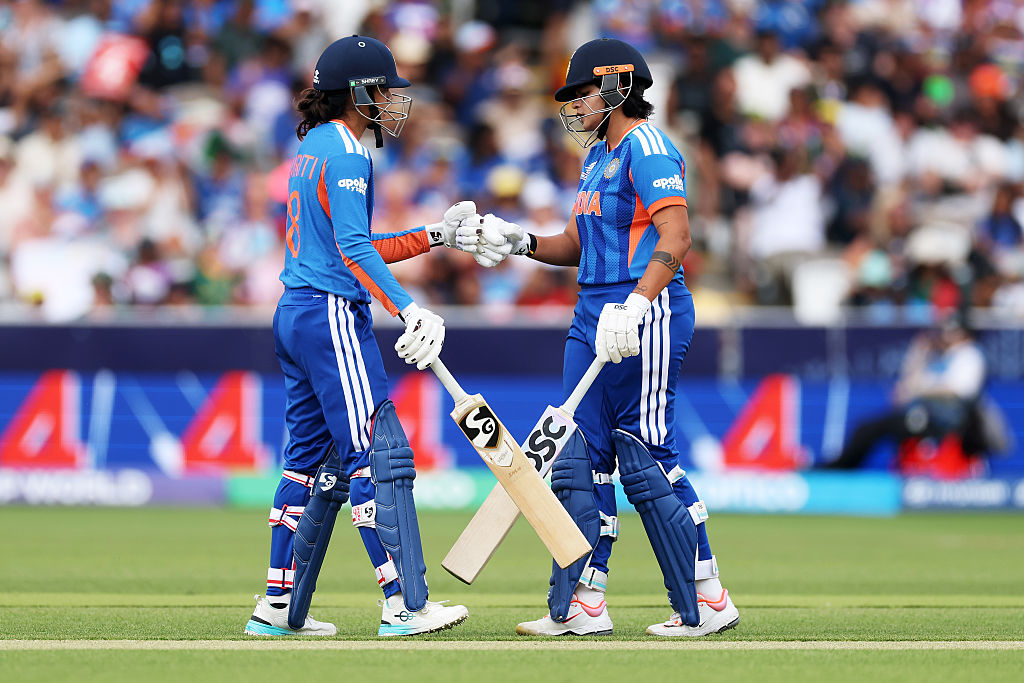
Fulmali played only against Pakistan, scoring one run before being stumped. Bhatia showed good form in the T20I series against England, but there were concerns around her strike rate. She scored just 41 runs at a measly strike rate of 117.14. Rodrigues had multiple opportunities to come in “clutch” as Muzumdar regularly urged. But that moment never came, barring a small cameo against Bangladesh, as Rodrigues scored 92 runs, striking at just 119.48, a far cry from her capabilities. Harmanpreet , barring the final game against Australia, was no better with the strike rate. Ghosh alone executed her role when necessary, playing the late striker at the back end of the innings, averaging a strike rate of 153.84.
This middle-order fragility often broke India, especially in the defeats to South Africa and Australia. The regular shuffle of the order did not help their case either, with Rodrigues sometimes batting as low as no.5, rather than her usual position of no.3, and Bhatia moving between no. 3 and even no.7. These factors, and even Kaur moving around after each game. Just as the rotating bowling, all this was just a search for the most ideal sequence, and playing a World Cup with this level of uncertainty just spells problems, not innovation.
What went right
Besides all the negatives, there were still many positives India took away from this competition. The pacers may not have had the best campaign, but the same can’t be said for the spinners. Shree Charani continued to make England her personal playground, taking 14 wickets, the highest in the group stages. She was backed by Deepti Sharma and Shafali in the spin department.
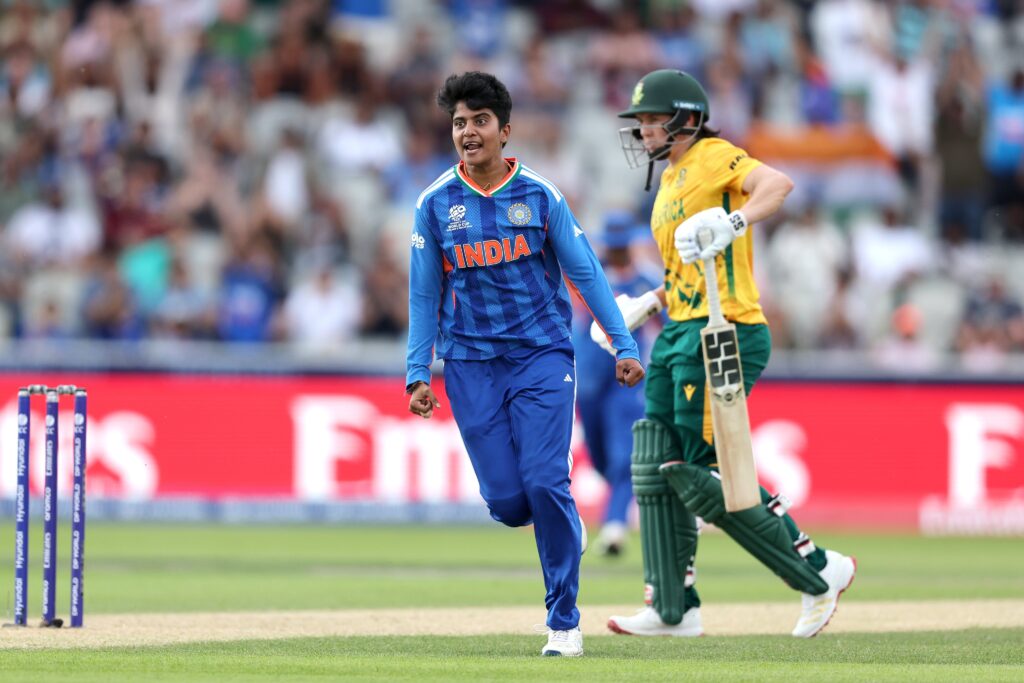
Deepti had a tournament to remember, taking seven wickets, including a career-best 5/10 against Pakistan and overtaking Jhulan Goswami as the highest wicket-taker in Women’s International Cricket at just 28.
Verma fully transformed into a match-winning all-rounder at this competition, following her heroics with the ball in the 2025 ODI World Cup final. Verma took five wickets at this T20 World Cup, bowling out in a majority of the games at an economy of 6.36, second only to Charani among the Indians. Verma was also just as good with the bat, scoring 179 runs at an average of 35.8 and a strike rate of 151.69. Her partner in crime up top, Mandhana, as always, showed her form at the biggest stage with 205 runs, the third-highest in the group stages, grabbing two Player of the Match awards along the way.
Most impressive was the arc of skipper Harmanpreet. She became the first player, in either women’s or men’s international cricket, to play 200 T20Is. However, through most of the tournament, she struggled to put up a good strike rate, particularly in high-pressure moments, facing criticism from many, including her former teammate Shikha Pandey.
Harmanpreet stepped up when it mattered in the final game against Australia and rolled back the years with a stellar 56 off 25, including hitting Sophie Molineux for three sixes in a row in the final over. It was an effort that did go in vain, but it showed that even at 37, Harmanpreet has far more to offer to the game and has no plans to stop, shutting down retirement speculations ahead of the World Cup.
Despite the elimination, this is still one of India’s better T20 World Cup campaigns. The criticism comes from the expectations following the ODI World Cup win in 2025.
But T20 cricket is a different beast, and while there have been signs of improvement, mainly through the exposure received through the WPL, there is still a way to go to master the unpredictable nature of the short format. It may, in fact, be something that cannot be simply mastered, but rather just understood, and that approach may be all India needs to “rethink” about. So Mandhana may be right about the gap being narrowed, but a gap still remains.
For more news & updates, follow The Crichub on Instagram, X and YouTube