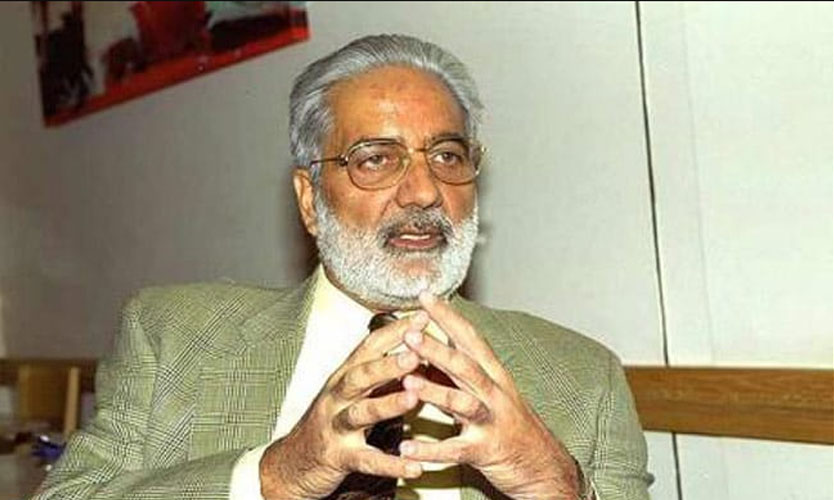
Inderjit Singh Bindra and the Punjab Cricket Association (PCA) are almost synonymous in Indian cricket. It was under his guidance and leadership that the PCA rose to become one of the major state associations in the Board of Control of Cricket in India (BCCI). There was a time when PCA did not have its own cricket stadium, nor did it have much say in the BCCI affairs. Things changed for the better only after Bindra became the president of the state association in 1978 and ruled the roost for 36 years.
During the period, Bindra not only changed the fortunes of the PCA but also played a big role in the BCCI becoming a major power in the cricket world. It was during his tenure that Punjab won its only Ranji Trophy title in 1993 and the following year, he was instrumental in the newly-built stadium in Mohali, now named IS Bindra Stadium, hosting its first-ever Test match against the West Indies in 1994. Ever since, there has been no looking back for the PCA, and now it has built another huge stadium in New Chandigarh to carry forward the Bindra legacy.
The BCCI mourns the passing of former BCCI President – Mr IS Bindra. 🙏
— BCCI (@BCCI) January 25, 2026
The Board's thoughts and prayers are with his family and loved ones. pic.twitter.com/boNAhwNSnL
Of course, the PCA and Punjab cricket owe Bindra gratitude for making it the force it is today, but more than that, it’s the BCCI that owes Bindra immensely for laying the foundation for it to become the strongest cricket board in the ICC. It all started with the trinity of NKP Salve, Bindra and Jagmohan Dalmia ending the hegemony of the England Cricket Board (previously known as Test and County Cricket Board) over world cricket.
The trio of a politician (Salve), an administrator (Bindra) and a businessman (Dalmiya) proved a handful for the ICC and the ECB as they forced the ICC to finally shift the Cricket World Cup out of England. The first three editions were held in the UK in 1975, 1979 and 1983, which India had won under the leadership of Kapil Dev. That emboldened the trio to demand staging the 1987 World Cup in South Asia, and with the support of the Pakistan Cricket Board, they were able to host it with great success.
The World Cup was held again in South Asia in 1996 after Australia and New Zealand had combined to conduct the tournament for the first time in 1992. It was only after 16 years since 1983 that the World Cup returned to England in 1999. With the English hegemony broken, gradually Australia and India joined England as major cricketing powers and even today the trio holds sway over world cricket, with India becoming a superpower that now controls the ICC both financially and administratively.
There is no doubt that it was Bindra who had set the ball rolling when he got the idea of hosting the World Cup in India, the moment he saw Kapil Dev lift the trophy from the Lord’s balcony. That victory ignited a spark that has since taken Indian cricket to great heights both on the playing field and off it. It is well known the role Bindra played in making BCCI a financial powerhouse by breaking the Doordarshan hegemony over telecasting international cricket by shrewdly making use of Salve, the politician who was very close to the late Prime Minister Rajiv Gandhi, and Dalmiya, who had a great business acumen. He also used his diplomatic skills to win over South Asian cricket-playing nations, especially Pakistan, in helping the region to become a strong cricket centre. Even today, no ICC event can be successful without the active participation of spectators, viewers and the cricket boards from the region.
Of course, Bindra had a very humble beginning as a cricket administrator, as the Punjab Cricket Association did not have a stadium of its own. A few international matches were played in either Amritsar or Jalandhar. First-class matches were conducted at the Baradari ground in Patiala, and many other cities, including at the Sector 16 stadium, which technically belongs to the Chandigarh administration. When the writer went to cover the Punjab vs Bengal Ranji Trophy match at the Sector 16 stadium in 1988, Bindra revealed his plan to build a stadium on the outskirts of Chandigarh and set it up as the headquarters of the PCA. He lived up to his words, and the moment Mohali stadium became operational in the early 1990s, it hosted an ODI between India and South Africa in the Hero Cup on November 22, 1993.
Personally, it is always a pleasure to cover matches at the stadium in Mohali. Though the is am based in Lucknow, his parents’ house is barely a few KM from the stadium. Besides, the hospitality of the PCA has always been great, with the media persons being well looked after. There was a time when beer was served in the press box during breaks, but ultimately that tradition was ended as more and more people used to barge into the media box to partake of the PCA’s generosity.
As cricket grew by leaps and bounds, that stadium outlived its utility, as there are rows of housing societies around it and with the construction of the hockey stadium nearby, parking vehicles and controlling the crowds became a major problem. This led to the new stadium in New Chandigarh, the blueprint of which was drawn by Bindra before he called it quits as a cricket administrator in 2014.
That brought to an end his tenure as a great cricket administrator, and slowly he became more and more recluse as he suffered from dementia. He was seen at the stadium sparingly thereafter, especially during the IPL, which he had helped set up along with Lalit Modi in the heyday. Bindra left this world on the eve of Republic Day at the age of 84, with a majority of his life devoted to the service of cricket in Punjab, and more so to Indian cricket. May his noble soul Rest in Peace.
(Santosh Suri is a former Sports Editor of the Lucknow Edition and has covered cricket extensively worldwide over the last 40 years…)