The Cricketer
People typically remember Wadekar as the ‘lucky’ captain, who won two overseas Test series during 1971, both first-time-ever for India. What people tend to overlook is that he had scored 2,113 runs in 37 Tests; he was the first Indian left-handed batter to cross 2,000 runs, and has been surpassed so far by only Sourav Ganguly, Gautam Gambhir, Yashasvi Jaiswal, and Shikhar Dhawan (not including all-rounders like Ravindra Jadeja and Rishabh Pant). Batting at No 3, he had scored 1,899 runs – next to only Rahul Dravid, Cheteshwar Pujara, Mohinder Amarnath and Dilip Vengsarkar. Not a bad show, say what!
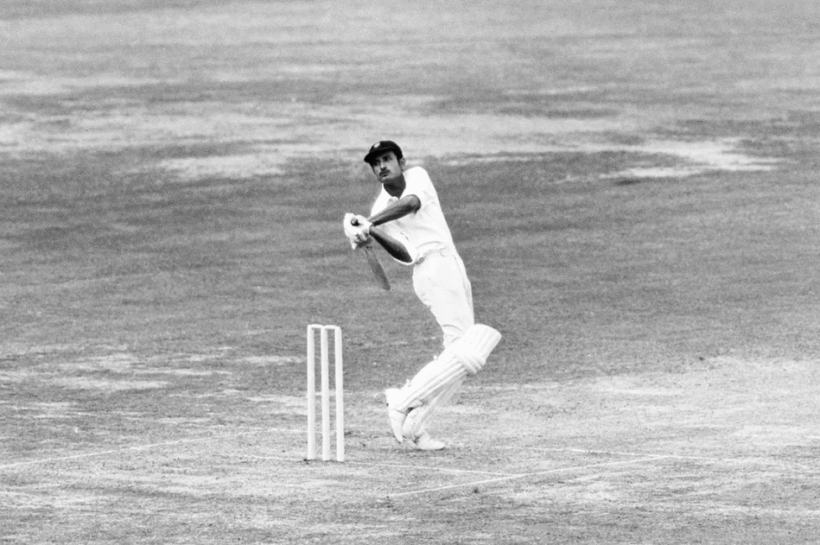
Wadekar was more aggressive than elegant, and more efficient than ostentatious. Tall, lean, bony, feet wide apart in an open stance with a somewhat ‘crooked’ waist, gripping the bat high and swinging it freely, one of that exceedingly rare genus, the Indian left-hander, Wadekar looked as he was, a homespun stylist. He often hit the ball harder than most people expected from someone with his wiry build. Despite his aggression, there was a calm reassurance in his batting and general attitude, which soothed his side, more so when he led them on the field.
An excellent accumulator of runs at the domestic level, he could not perform at his best at the international level, possibly because of the burden ushered upon his shoulders when he was still relatively growing as a batter at the Test level – 21 matches, 1,364 runs @ 34.10 spanning 3-4 years. The more he took his team to newer heights, the more it went on to affect his Test records – 16 matches, 749 runs @26.75 spanning the next three-four years.
The fact that he rarely missed his fielding practices despite his science practical classes during his college days must have had something to do with his fielding. He was rather unusual, with respect to Indian cricket during those days – a brilliant catcher at slip with great powers of recovery when those around him sometimes went for the edge and then withdrew. A total of 46 catches from 37 Test matches should bear testimony to that.
Early Days
Wadekar showed an aptitude for mathematics at a very young age — a trait that possibly played a crucial role in the shrewdness he displayed as a captain and manager. As his school days came to an end, the Wadekar household was confused: they could not decide whether to make him an engineer or a doctor. Ajit chose the former himself because he apparently was too afraid of injections – he would much rather have faced a bouncer from Hall or Snow! He apparently had also expressed a desire to be an airline pilot but finally decided on a career in banking.
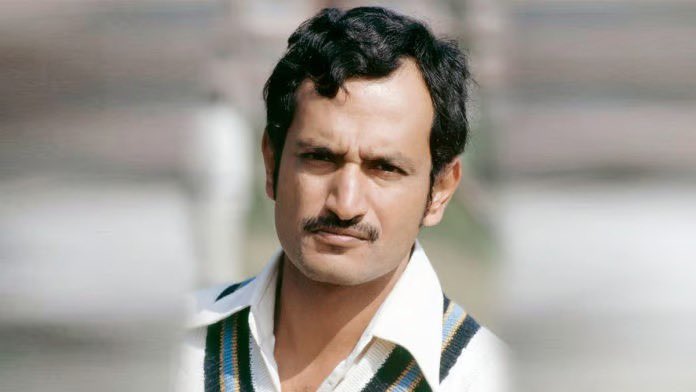
He was enthusiastic about the game when in school, but had generally restricted himself to tennis-ball cricket. Once, after acquiring full marks in algebra, his father gifted him a Stuart Surridge cricket bat autographed by Neil Harvey – thereby exposing Wadekar to proper cricket.
And then, one day, when Wadekar boarded the bus for Elphinstone College, he found Baloo Gupte, his college senior and Indian Test cricketer, on the same bus. Gupte told Wadekar that they needed a twelfth man for a match, and the lunch allowance was INR 3! Wadekar got interested, agreed and boarded the bus. The decision would change his career in a way similar to Bollywood movies.
When he was in college and was playing his cricket mostly at Shivaji Park (in Dadar area of Bombay), Vijay Merchant had predicted that Wadekar would go on to lead India one day. Years later, it was Merchant’s casting vote that eventually went on to select the middle-class Bombay cricketer over the blue-blooded prince Pataudi.
Test Debut
Despite scoring heavily at the domestic level, it took Wadekar several seasons, since 1958-59, to make his Test debut. By then, he had already become a much-respected batter in the domestic circuit, dominating every opposition with machine-like accumulation of runs, season after season. He had also won the Arjuna Award in 1967, the fifth cricketer to win the award.
Making his debut in the Bombay Test of 1966-67 season against a bowling attack comprising Wes Hall, Charlie Griffith, Garry Sobers and Lance Gibbs, Wadekar managed only 8 and 4 and was dropped for the next Test at Calcutta. He was brought back for the third Test at Madras and scored a duck in the first innings. Critics were sharpening their knives already. He finally came to his elements in the second innings, top-scoring with 67 in 98 minutes. His innings helped India gain a strong position in that match for the first time in the series. Wadekar had finally arrived.
Overseas Tours
Wadekar had a decent tour of England, followed by an ordinary tour of Australia. He was not quite able to come to terms with the extra bounce of the Australian pitches: Sam Gannon knocked out his tooth with a bouncer in India’s tour match against Western Australia, and clean bowled him next ball – thereby starting what turned out to be a difficult tour for the southpaw except for an innings of 99 at MCG-Test.
India toured New Zealand next – and this was where Wadekar blossomed as a batsman for the first time. In the first Test at Dunedin, he top-scored in each innings; the first-innings 80 helped India secure a slender lead, and the second-innings 71 ensured that there was no nerve as India chased 200 for their first-ever overseas Test victory.
After India lost the second Test at Christchurch, Wadekar played possibly his greatest-ever Test innings. After Prasanna helped bowl out New Zealand for 186 in the Wellington Test, Wadekar scored 143, which was the only fifty in the innings. With his diligence and application, he batted New Zealand out of the Test before Nadkarni mopped things up. India won the fourth Test at Auckland as well, thereby winning their first-ever overseas series (3-1). Wadekar scored 328 runs – the highest among Indians – at 46.85 in the series. It was not the last time he would help India win an overseas series.
Home Series
Although he could not do much against New Zealand in the 1969-70 season, his consistent performances (three half-centuries – 91*, 62, 55 plus one 46, from 10 innings) against the touring Aussies in the same season stamped his authority at one-down position. He also became the vice-captain of the side under Pataudi.
Ascent to Captaincy
Despite their first-ever overseas series victory, Indian cricket seemed to be on its wane towards the end of the 1960s, and it called for a change in leadership. Before the twin tours to the West Indes and England in 1971, the selection committee met to choose the team, and to everyone’s surprise, Wadekar was equal on votes with Tiger Pataudi, and the selection committee chairman Vijay Merchant used his casting vote to elect Wadekar as the captain of India.
Wadekar had gone out shopping with his wife that day “to get some tapestry to furnish the drawing room.” On his return, he found a substantial crowd, many of them journalists, flocked outside the building. As a perplexed Wadekar tried to investigate, he was congratulated and even garlanded by the group of people!
West Indies Tour
It was the first time that India had won a Test on West Indian soil. Marshalled by Wadekar and motivated by batting performances of Sardesai and Gavaskar, the Indians held on to their lead. India finally managed to win their first-ever series on West Indian soil, and suddenly, from nowhere, the team that had looked so dejected a season back had now emerged as the victors.
England Tour
On the last day of that historic Oval Test, Wadekar, after being dismissed early in the morning, promptly fell asleep in the dressing room. He was finally woken up by his teammates after the winning runs were scored. Ken Barrington came to the Indian dressing room and uttered the words “It is all over. The match is yours. They will want you up there on the balcony.”
‘Best Team’
Wadekar’s India had now defeated West Indies and England at their dens. With Pakistan’s ascent still a few years down the line, Australia’s lacklustre performance, and South Africa’s ban, India were definitely the contender for the best team in the world. They still had to deal with England at home, though.
And that was achieved when India took the home series 2-1 against England. Whatever doubts were there regarding India’s supremacy in world cricket had vanished by now. India were the best side in the world, and it was Wadekar who had led a combination of seniors and youngsters to reach them to the summit.
“Summer of 42”
Things changed drastically during the England tour of 1974. Wadekar did not get Pandurang Salgaoncar for the tour. Salgaonkar, who had spent the summer in Alf Gover’s school and was the fastest bowler in the country, was overlooked. Gavaskar had not scored a hundred since his first series; Viswanath was more of a dazzler than an accumulator; Wadekar had insisted on Pataudi’s inclusion and had offered to relinquish his role as the captain if necessary: but Pataudi would not give in and had withdrawn.
Additionally, there was a row between Wadekar and Bedi before the first Test. Bedi wanted Wadekar to talk to BCCI to pay the cricketers more – but Wadekar saw this as a move for Bedi to form his own ‘camp’ in the side that already had Pataudi supporters. All in all, the series began in the foulest of moods. After being routed 0-3 in the series, Wadekar’s house was stoned.
Swift End
On return to India after that disastrous tour, Wadekar, the then captain of the West Zone Duleep Trophy side, was dropped for no apparent reason. A dejected Wadekar, knowing his days were numbered, retired immediately from First-Class cricket. He took a deal from BCCI, who gave him an impromptu benefit match during the 1974-75 West Indies series that followed – in return for his announcing his retirement. He was only 34 then.
Captaincy Traits
Wadekar urged every teammate to sledge, whether in West Indies or in England. To his teammates who told him that they were not proficient in English, he asked them to go ahead and sledge in their preferred language: “If you can’t get the words right, fine, at least make sure it sounded like sledging!” – remember Ganguly and Kohli!
Indeed, he embraced cricket like a man who lived in the present. He was an astute strategist, a natural leader, and a ‘father figure’ (as per Anil Kumble) to the young generation.
A small ‘island’ of Wadekar was surrounded by a ‘sea’ of Pataudi in the captaincy story has meant that the man from Bombay rarely received his due for what he accomplished. When he took over, it was Pataudi’s team; when he quit, it was left to Pataudi to rebuild (India lost a wonderful series 2-3 to West Indies, then emerging as a world power).
Yet it was Wadekar who insisted on Dilip Sardesai accompanying the team to the West Indies in 1971, against the wishes of Merchant. Sardesai made 642 runs and was the rock on which Gavaskar (774) and, by extension, India’s batting built itself. Wadekar understood the importance of mixing experience with youth. ML Jaisimha and Salim Durani were on the West Indies tour, and Abbas Ali Baig and Farokh Engineer went to England. Durani’s dismissal of Garry Sobers and Clive Lloyd in the Port-of-Spain Test that India won, and Engineer’s batting at the Oval Test were key factors in India’s wins. In those early days Wadekar also nurtured the batting genius of Gavaskar, whose “See you, skipper” when going out to bat was met with “Not for a long time”.
Coaching Tenure
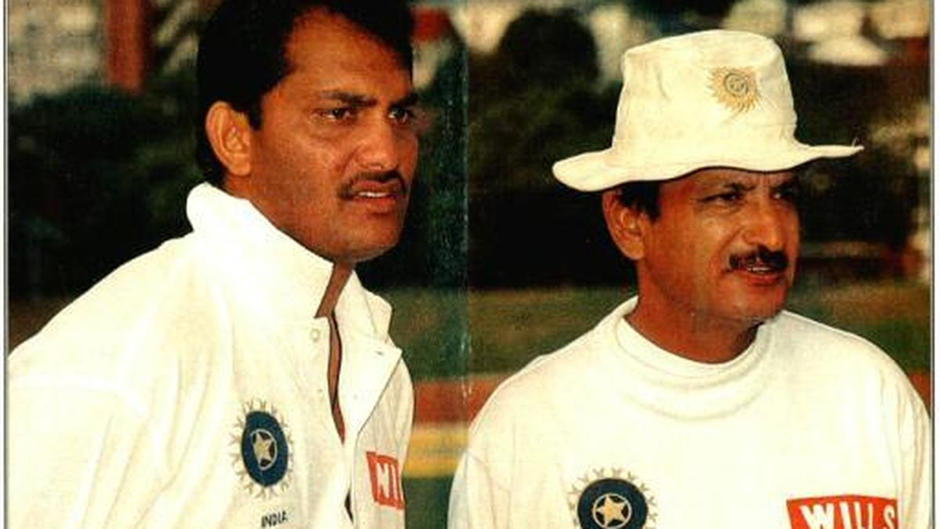
Wadekar served as the manager-cum-coach of the Indian team for four full seasons during the first half of the 1990s, forming an excellent bond with skipper Mohammad Azharuddin and making India a formidable, virtually unbeatable, side at home during 1992-93 to 1995-96. During his tenure, India played 13 Test matches at home, won nine of those and lost only one (against West Indies); four overseas tours (to Zimbabwe, South Africa, Sri Lanka and New Zealand), totalling nine Test matches, however, produced only one win (against Sri Lanka) and one loss (against South Africa). India also won the Hero Cup in 1993-94 season. It was he who allowed Tendulkar to open innings in the ODI series during New Zealand tour of 1993-94 season.
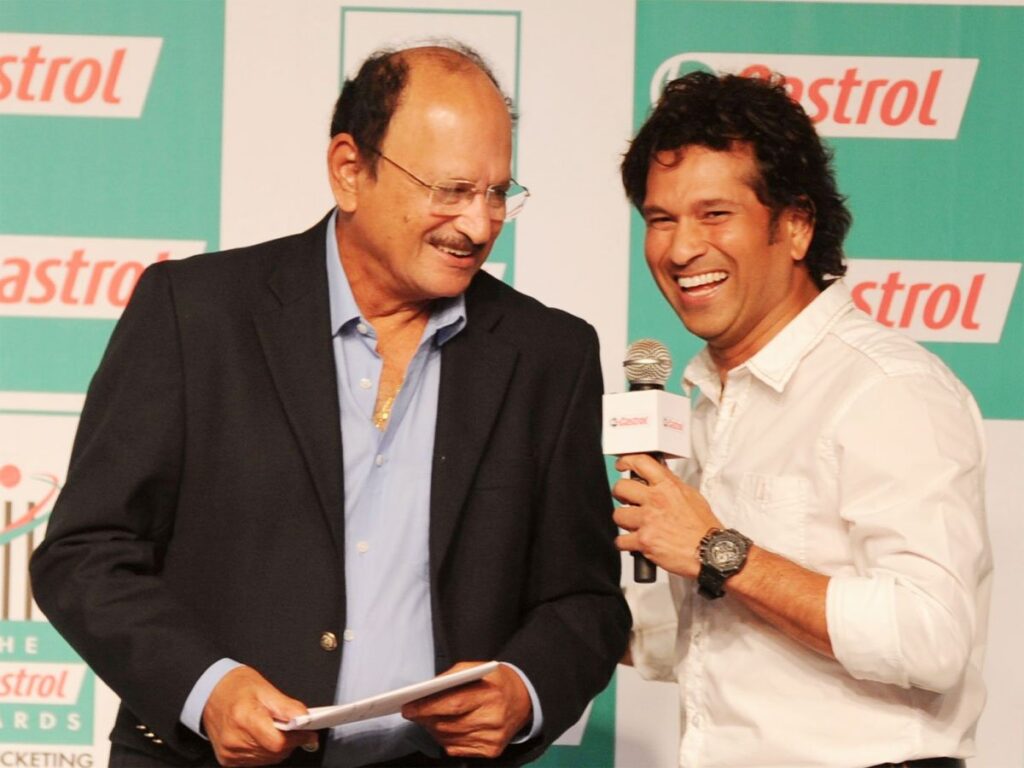
However, after India’s miserable defeat against Sri Lanka in the semi-final of CWC-1996, he signed off from this role. Apparently, his support for Azhar’s decision to field first after winning the toss added fuel to the fire. By that time, he was promoted by State Bank of India as Chief General Manager as well, and he went back to his banking career.
After signing off as coach, he had a stint as the Chairman of the National Selection Committee (NSC) in 1998-99 — making him only the second Indian cricketer (after Lala Amarnath) to assume the roles of captain, manager (or coach), and chairman of selectors.
Interestingly, he backed T20 cricket and the glamour and money that came with it in stark contrast with several yesteryear cricketers, and advocated very strongly for implantation of DRS.
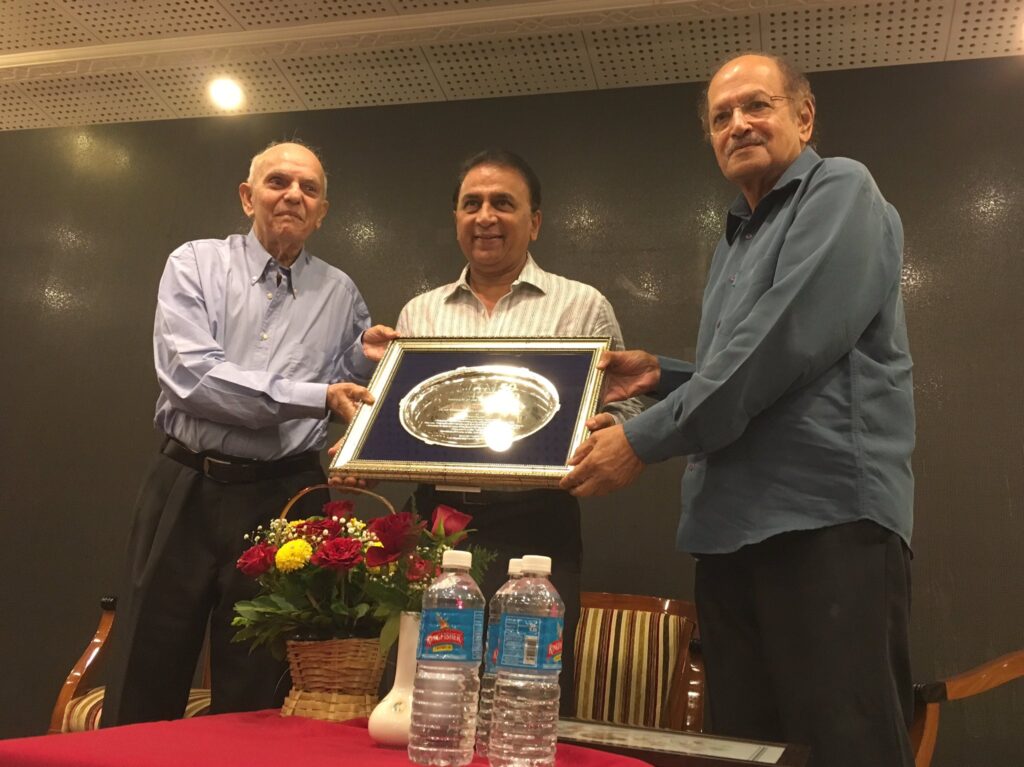
Later, he was awarded BCCI’s highest honour, CK Nayudu Lifetime Achievement Award.
The Man
There was much to admire about Wadekar. His simplicity, his pragmatism, his loyalty, his diplomacy, his empathy for the less gifted, and his sense of humour. He delighted at after-dinner speeches in South Africa on India’s first tour of that country, speaking not fluently or in a practised manner but deadpan and with a lot of heart.
The quality Merchant had detected in Wadekar was serenity. He was never flustered or fretful; his bearing was unaltered by success or failure; he described himself as “pretty cold-blooded”. After the grace and humours of the mercurial Pataudi, with his royal blood and the looks of a Fellini male lead, Wadekar, as a contrast, was a gentle persuader and conciliator. But both nurtured spin bowling (and fielding) culture in Indian cricket – let us not overlook that.
Wadekar oversaw Indian cricket’s transition from an also-ran to a world power, both as captain and as coach. He wore that achievement lightly, responding with a lopsided grin when anyone spoke about it. The surface softness hid a certain determination and awareness.
Views on Coaching
Here is an excerpt from an interview given by Wadekar after he moved away from his coaching days:
“I did focus on planning and strategy. During our playing days, there was no coach, while the manager would only look after the accommodation and ticketing. There was no help with fielding sessions as well; the captain had to do everything, with help from some senior players.
As a coach, if the players do not have any thinking power, the coach has to think (for them) and plan accordingly, and get things done from the players. Whatever he has in mind, he has to communicate that and let it percolate down to the players exactly: what he thinks of the position, what kind of planning he has to get the opposition out as early as possible, what kind of batting he expects from the players, etc.
To be a coach of the Indian team is a bit difficult because here in India, in those days, we had 13 official languages and 700-plus dialects. Culturally, we are all different. Religion-wise also we are different. To get them to play as a one single unit is a problem. It is not that difficult for Australia or England.
Subconsciously or unconsciously, the player sub-groups start forming, and that one has to avoid. You have to tell them, “Let the inferiority complex pass by. Do not worry about that. You are as good as everyone else.” Guys of Sunil Gavaskar’s calibre would know these things, but the other players may not know exactly. So you have to tell them, “You have got the same talent.” And of course, concentrate on fielding and catching. All these things a coach expects.
When I took over as Coach-cum-Manager, then, the practice was they would have a different coach for every series. That is pretty bad because if you are in for only a short time, you would not know exactly the players, and you cannot do the SWOT analysis of the players and the oppositions. You require some time to get to know your players, and later on, think about the opposition. My first assignment, to South Africa, was terrible, but I noticed there that the players were losing a little bit of their focus. May be because, (some of them thought) they hardly played anything, so they will go out in the evening for dinner or something, and they would lose their concentration or focus in the game.
So, I brought in a code of conduct. I wanted to bring in some discipline. Of course, some of the players revolted against that. After we started winning against England, the same players came back to me, because I thought I would relax some of the restrictions, and said, “Do not do that. Let it be same. We are doing extremely well.” That was important because other players realizing that discipline has to go with the talent. If you lose your focus, you lose your discipline.”
[Sources: Articles by Abhishek Mukherjee, Suresh Menon, Gideon Haigh from Cricket Mash, Cricket Country, ESPN Cric Info, and Interview with Subash Jayaraman]