When British India was partitioned in August 1947, the consequences rippled far beyond politics. Cricket, the subcontinent’s most cherished colonial inheritance, was thrust into uncertainty. Selection committees were disrupted, domestic structures were split and players were forced to confront questions of belonging they had never anticipated.
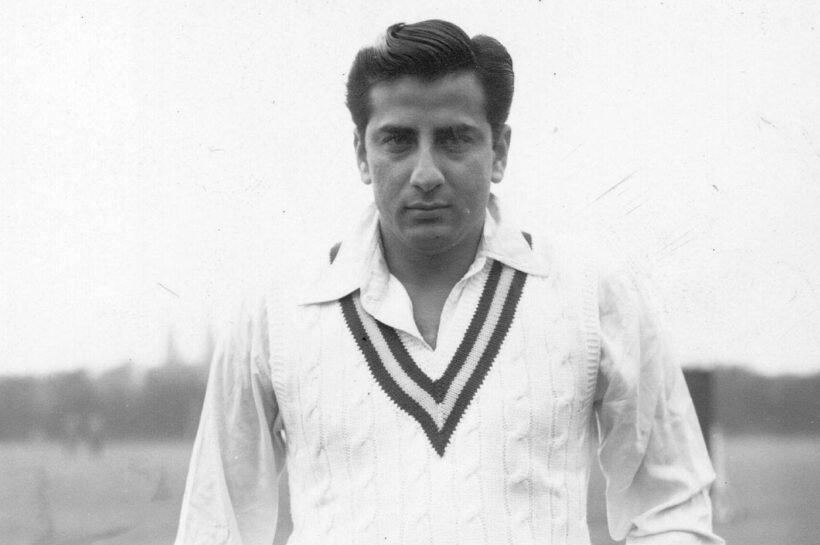
It was in this unsettled landscape that the case of Fazal Mahmood emerged. Officially, he refused to tour Australia in 1947-48 because Lahore had become part of Pakistan and he had, by extension, become Pakistani. But his own account suggests that the story was not quite so simple.
In February 1947, the 19-year-old right-arm fast bowler Fazal went from Lahore to Bombay to play for the North Zone in a cricket tournament under the captaincy of his ‘hero’ Lala Amarnath. In the first week of March, several political and communal riots broke out in Lahore, and attacks were carried out on Hindus, Muslims and Sikhs across the state of Punjab.
Fazal was on his way from Bombay to Delhi, playing the last trial match of the team’s formation for the upcoming tour of Australia. Among those who played with Fazal were Amarnath (a Hindu from Lahore), Ghulam Ahmed (a Muslim from Hyderabad in the South), Kumar Rai Singh (a Sikh from the Punjab dynasty) – seemingly quite a warm picture of communal harmony, all eager to represent India in the upcoming cricket season and play against the Australians in Don Bradman’s country. Stupid fools – weren’t they!
In that match, Fazal took five wickets for 45 runs using his leg-cutters. His reaction on learning that he had been selected for the touring team, “As I heard my name being called out, I rushed to the telegraph office to send a telegram to my parents in Lahore.” He was asked to join a pre-tour training camp in Poona on 15 August. The 20-year-old Fazal had the prospect and dream of international fame, success, recognition and awards in his professional career.
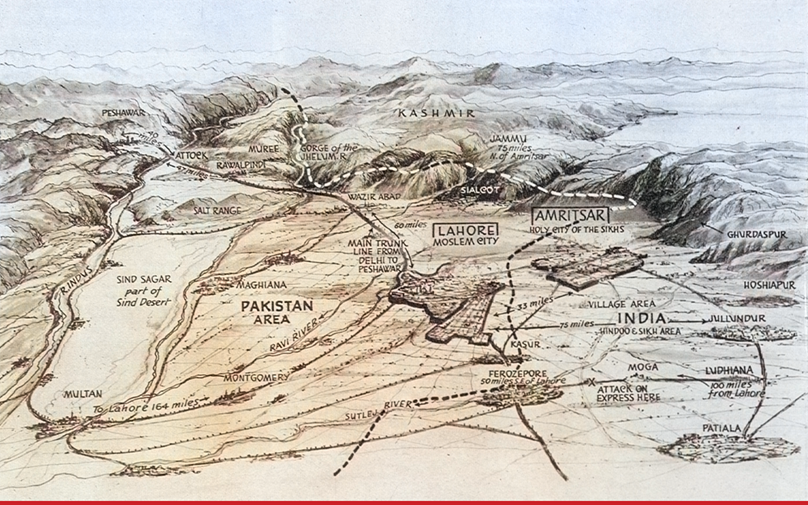
He returned to his state of Punjab, where communal violence had just been suppressed after the deaths of several thousand people. But as a result of these (and several other incidents that had occurred in the previous five years), the British government panicked and decided to leave India by 15 August 1947 instead of the previously scheduled June 1948. Cyril Radcliffe was hastily appointed on 9 July to demarcate the boundaries of the two bordering states of Punjab and Bengal.
Fazal’s hometown of Lahore in Punjab province, located near Radcliffe’s newly created border, became a hotbed of unrest and anarchy. In his autobiography, Fazal wrote: “When I arrived in Lahore, the mayhem was at its peak, and the curfew was a daily routine. Therefore, it was not possible to practice any cricket.”
On August 14, 1947, the ‘birthday’ of Pakistan, Fazal was in Lahore, thinking of somehow reaching the training camp in Poona. After covering 650 miles through the scorched and devastated countryside of Punjab and Sind, he reached the port city of Karachi on the Arabian Sea, from there he flew to Bombay – witnessing these two opposing streams of millions of homeless people, which left an everlasting impression on his young mind.
From Bombay, he went to Poona. But the situation around him and the heavy rains made it difficult to practice there. In the meantime, Mushtaq Ali sought exemption from the touring team due to physical and family reasons, Modi had already informed about his illness. In the end, the training camp was abandoned, and the players were told to prepare for the tour and go to their respective homes. This time, the ‘newly-foreigner’ Fazal was in danger, suddenly returning to the city he had gone to.
On the return train from Poona to Bombay, some fanatical goons might have beaten him to death if one of his fellow passengers, C.K. Naidu, had not stood up with a cricket bat! On September 9, Fazal returned to Bombay and tried to return to Lahore via Delhi. But hearing this warning that he might be killed on the way, he somehow managed to get a plane ticket to Karachi and from there reached Lahore on September 13. There he found his parents in a state of great distress because they had not heard from him for a month, nor had any letters or telegrams reached them. They begged Fazal not to go to India again.
Despite great reluctance, Fazal sent a telegram to Amarnath informing him that he was unable to go on the trip. This most important decision of Fazal’s life had a profound and far-reaching impact on Pakistani cricket. Almost half a century later, when he was deemed the ‘Father of Pakistani Cricket,’ he said that his decision not to play for India was a matter of principle, of patriotism. But in reality, we see that the story was much more complicated.
Fazal Mahmood was born in Lahore on 18-Feb-1927.
(Kalarab Ray has been an ardent cricket-lover since his early childhood. After completing his engineering post-graduation from Jadavpur University in Kolkata, he spent almost three decades in the information technology industry and later moved to academia. He has travelled widely across the globe and has been an avid reader and collector of cricketing literature…)